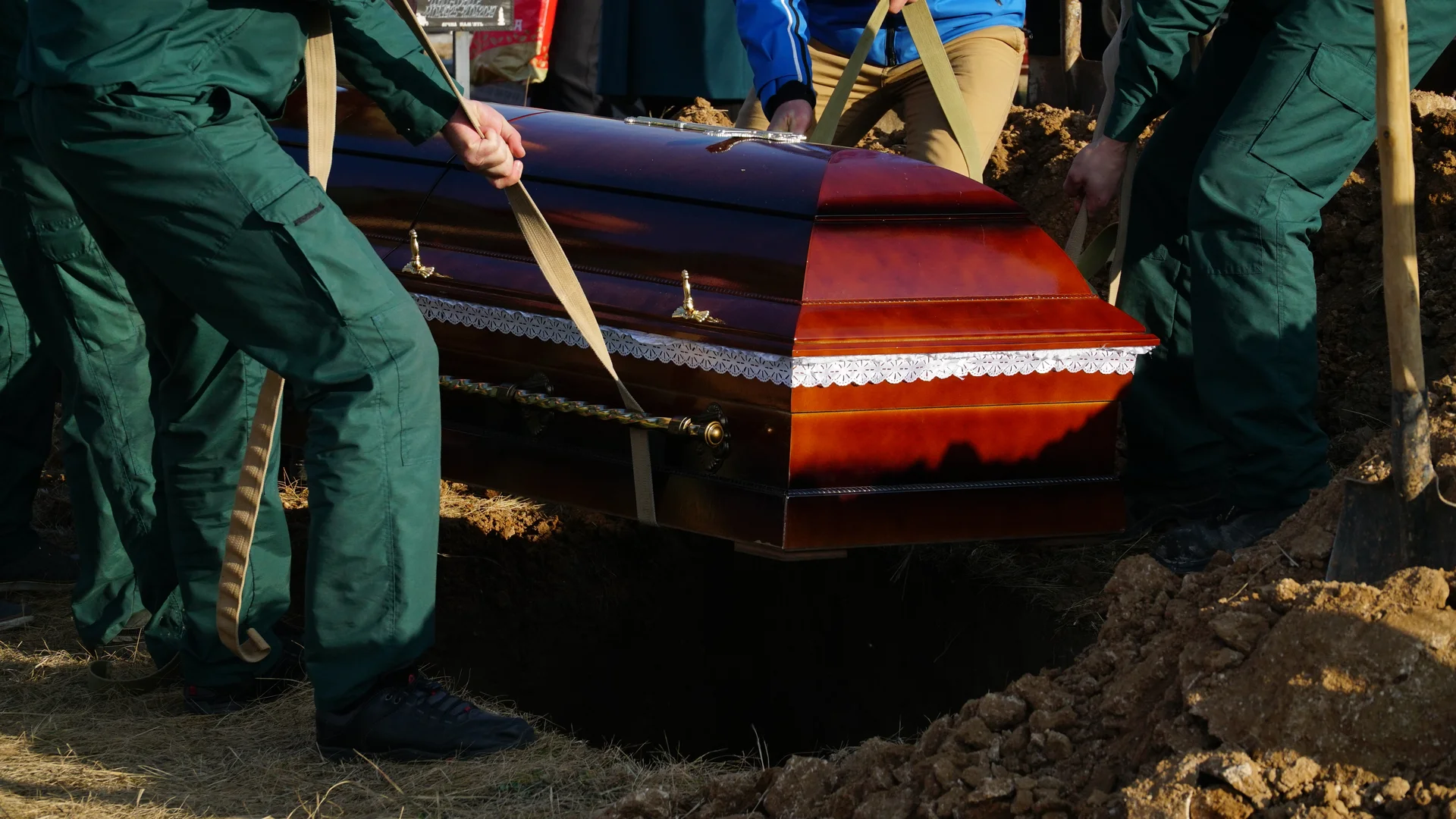
Personal injury cases can take several years until they are resolved. As often happens, a litigant passes away during an active lawsuit. New York Civil Practice Law and Rules (CPLR) § 1015 is the procedural rule that dictates what happens under such circumstances. Since a deceased individual cannot legally sue or be sued, this statute prevents an ongoing case from dissolving upon a party's death, whether that party is the plaintiff or the defendant. CPLR § 1015 provides a legal bridge that ensures a valid claim survives the death of either side, allowing the lawsuit to safely pause and then continue once a proper legal representative is substituted in place of the deceased party.
In This Article
Understanding the NY Death Substitution Law
CPLR § 1015 operates in two distinct scenarios governed by its two subsections. Subsection (a) establishes the general rule: when a party dies and the claim for or against that party is not extinguished by death, the court shall order substitution of the proper parties. Substitution under this provision is mandatory, not discretionary, once the survival threshold is satisfied. Subsection (b) addresses multi-party actions where only one party dies and the surviving parties' rights continue independently, in which case the action does not stop, and the death is simply noted on the record.
Statutory Scope and Survival of Claims
Invoking CPLR § 1015 requires satisfying two strict structural prerequisites. First, the underlying cause of action must not be legally extinguished by death. Under New York Estates, Powers and Trusts Law (EPTL § 11-3.2), personal injury, medical malpractice, and property damage claims explicitly survive a party's death. Claims that are purely personal in nature, such as certain dignitary or privacy torts, may be extinguished, and the survival question must be assessed before substitution is sought.
Second, the litigation must have been actively pending at the time of death, meaning a summons and complaint were already filed and an index number purchased before the party died. A claim where the injured party never commenced a lawsuit is not subject to this statute's substitution mechanism at all.
The Absolute Freeze: The Automatic Stay Rule
The most critical feature of a party's death under CPLR § 1015 is the automatic stay it triggers by operation of law. Until a representative is formally substituted, the court loses jurisdiction over the deceased party, and their attorney's authority automatically terminates.
The consequences of this freeze are absolute. Any judicial orders, discovery deadlines, motions granted, or case dismissals issued by a judge during this period are void as a matter of law. An opposing party cannot obtain a dismissal, default, or enforce an order entered against the deceased. This protection prevents the opposition from taking unfair advantage of a period when the estate is unrepresented and the decedent's attorney has no authority to act.
The Two-Step Procedural Mechanism for Substitution
Resuming a lawsuit frozen by the automatic stay requires navigating two separate court systems in sequence. Neither step can be skipped, and the litigation may not resume until both are completed.
Step One: Surrogate's Court Appointment
A petition must be filed in the New York Surrogate's Court to appoint a formal estate fiduciary. If the decedent left a valid will, the court will appoint an Executor named in that document. If the decedent died without a will, the court will appoint an Administrator. This fiduciary becomes the legal representative of the estate and the party who will stand in the decedent's place in the pending lawsuit.
Step Two: Supreme Court Substitution Motion
Once a fiduciary is appointed, a formal motion for substitution must be filed under CPLR § 1021 in the Supreme Court where the injury case is pending. The motion requires personal service of process on the newly appointed estate representative. The litigation does not resume until the court grants this motion and the substitution is officially entered on the record.
CPLR § 1021 also imposes a time-limit risk that cannot be ignored. Courts have dismissed actions where the substitution motion was delayed without adequate justification, even where the underlying claim would have survived on the merits. Prompt action following a party's death is essential to preserve the claim and avoid dismissal for neglect to prosecute.
Strategic Value in Serious Injury Claims
Successfully navigating CPLR § 1015 preserves the financial recovery pipeline for grieving families and prevents insurance companies from escaping liability due to administrative delays. By swiftly managing the substitution process, a legal team protects the original lawsuit's filing date, keeps insurance policies within reach, and positions the estate to recover damages for the decedent's pre-impact terror, conscious pain, and suffering: categories of loss that belong to the estate and would be forfeited if the lawsuit were allowed to collapse.
The frozen period created by the automatic stay carries a practical cost that extends beyond the courtroom. Witnesses' memories degrade, documents go missing, and the defense consolidates its position while the estate is procedurally locked out. Surrogate's Court appointments can stretch for weeks or months depending on thecourt and the estate's complexity. Every day the litigation sits dormant is a day the opposing side uses to prepare without accountability. Moving immediately to initiate the Surrogate's Court petition is what determines whether the estate controls the litigation's momentum after death or cedes it entirely to the defense.
Sternberg Injury Law Firm PC
The personal injury attorneys at Sternberg Injury Law Firm have experience handling cases where a party has died mid-litigation. Any grieving family member or estate representative who wants to understand whether a pending lawsuit can continue after a party's death should speak with an attorney as soon as possible. We offer free consultations and can be reached by phone, text, or email. Our team can converse in many different languages.
NY CPLR § 1015 Frequently Asked Questions
When a defendant dies, the automatic stay attaches to the litigation as to that defendant, and the plaintiff must wait for the defendant's estate to appoint a fiduciary before the case can resume. Once an Executor or Administrator is appointed through Surrogate's Court, the plaintiff, not the estate, typically bears the burden of filing the CPLR § 1021 substitution motion to resume the action. The plaintiff's damages claim is then asserted against the defendant's estate, which is responsible for satisfying any judgment from estate assets. Insurance coverage carried by the defendant at the time of the incident generally remains available to satisfy a verdict.
The stay forecloses any dismissal obtained while it is in effect, but it does not protect the estate indefinitely. Opposing counsel's strategy is to wait for the estate to miss the reasonable-time window for filing the CPLR § 1021 substitution motion, then move to dismiss for neglect to prosecute, a ground courts will entertain even when the underlying claim was perfectly valid. Retaining an attorney immediately after a party's death is the only reliable way to close that window before it becomes a dismissal.
No. When the injured person dies before any lawsuit is filed, the estate must commence a new action in its own name rather than step into a pending one. That new action is subject to the applicable statute of limitations, which continues to run regardless of the death, and the claim must independently satisfy the survival rules under EPTL § 11-3.2. Missing the filing deadline in that scenario is permanent; there is no substitution mechanism to revive a case that was never started.
Under CPLR § 1015(b), a multi-plaintiff action does not abate when only one plaintiff dies, provided the surviving plaintiffs' rights continue independently. The death is noted on the record, and the surviving plaintiffs' claims proceed without interruption; no substitution motion is required for them. The stay applies only to the deceased plaintiff's share of the case, which resumes once the estate representative is formally substituted in. The defense cannot use one plaintiff's death to freeze or derail the claims of co-plaintiffs who remain alive.