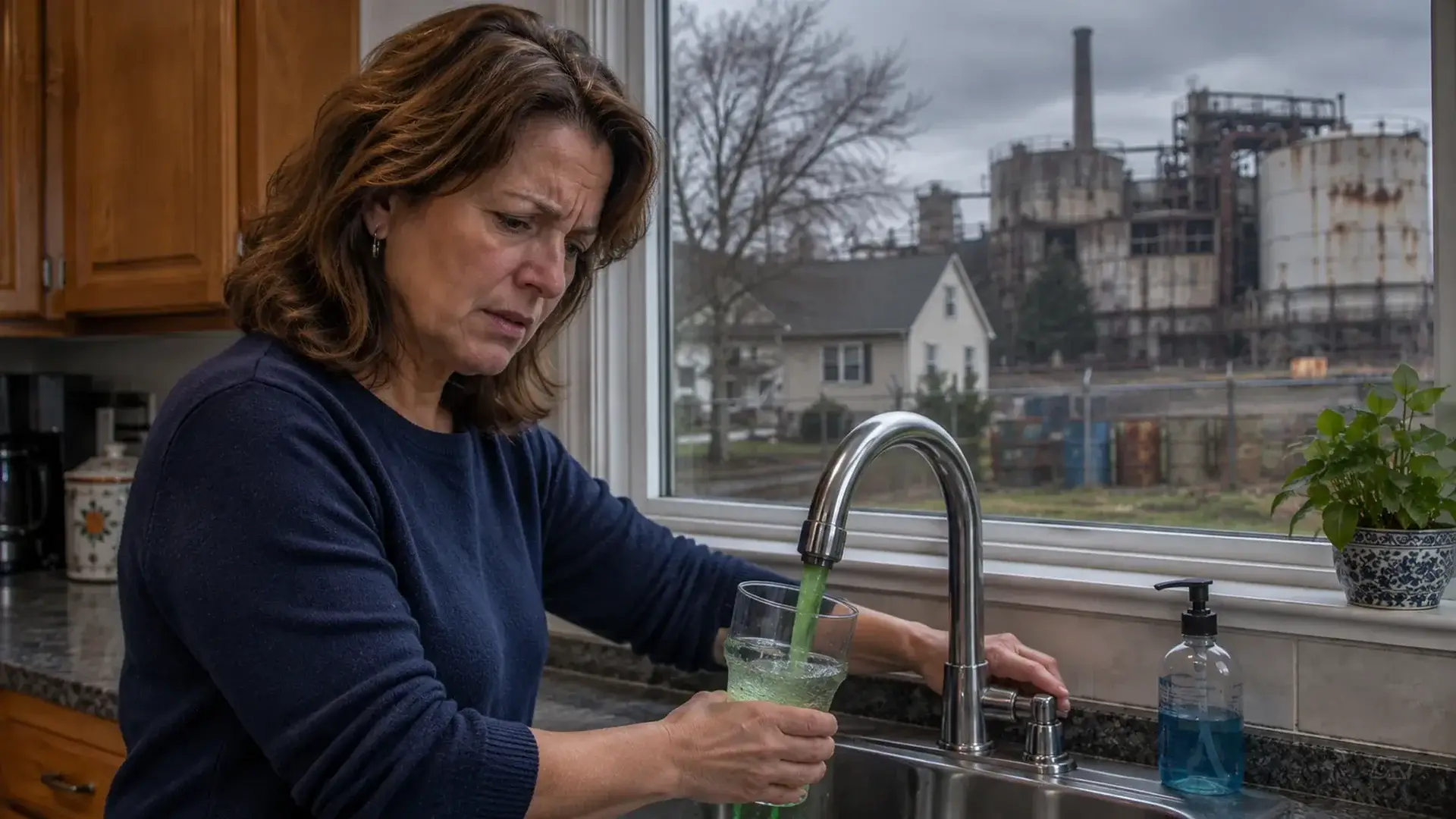
Personal Injuries From Superfund Site Contamination in New York
A Superfund site is an area that a federal or New York State hazardous-site program has formally identified for investigation or cleanup because of hazardous substances. Many are former industrial facilities, manufacturing plants, landfills, or waste disposal areas where chemicals were released into the surrounding soil, groundwater, or air. People can come into contact with those substances through drinking water drawn from an affected well or public water supply, through contaminated soil in a yard or work area, or through vapors that enter nearby buildings.
When exposure to hazardous substances causes a serious physical illness or injury, the injured person may have grounds to seek compensation through a personal injury lawsuit. Illnesses of this kind often take years to appear, and by the time a diagnosis arrives, the exposure may lie far in the past. Someone who became ill long after living or working near a contaminated property may assume the opportunity to sue has passed. When the area has received an official Superfund designation, that assumption deserves a closer look.
In This Article
When Superfund Site Exposure Injuries May Qualify for an Extended Filing Deadline
New York CPLR § 214-f sets a special filing period for personal injury actions caused by contact with or exposure to substances contained within an area designated as a Superfund site under either the federal Superfund law or New York's state program under Environmental Conservation Law § 27-1303. A qualifying action may be commenced within the period allowed by CPLR § 214-c or within three years of the area's designation as a Superfund site, whichever period ends later.
CPLR § 214-c supplies the ordinary measuring point for injuries caused by the latent effects of exposure to a harmful substance. Its three-year period generally runs from the date the injury was discovered or reasonably should have been discovered, whichever is earlier, rather than from the date of exposure. When an illness was diagnosed years before the area was officially designated, that period may already have run. CPLR § 214-f adds a second measuring point: three years from the designation itself. If that period ends later, it may make an otherwise late claim timely.
The designation-based period runs from the official designation of the area, not from the exposure, the diagnosis, news coverage, new testing, cleanup activity, or the date an individual first learned of the contamination. A site designated decades ago does not offer a fresh three-year window because it later attracts publicity or remediation work. The statute also requires a designation under the specific federal or state authority it names. A property that is polluted, proposed for cleanup, or handled under a different program does not necessarily qualify. The injury must result from substances contained within the designated area, and whether exposure through groundwater, air, or another pathway beyond the site satisfies that requirement depends on the facts.
Read the Full Text of CPLR 214-f
§ 214-f. Action to recover damages for personal injury caused by contact with or exposure to any substance or combination of substances found within an area designated as a superfund site. Notwithstanding any provision of law to the contrary, an action to recover personal damages for injury caused by contact with or exposure to any substance or combination of substances contained within an area designated as a superfund site pursuant to either Chapter 103 of Section 42 of the United States Code and/or section 27-1303 of the environmental conservation law, may be commenced by the plaintiff within the period allowed pursuant to section two hundred fourteen-c of this article or within three years of such designation of such an area as a superfund site, whichever is latest.
Illnesses and Health Conditions Linked to Superfund Site Exposure
The hazardous substances found at contaminated sites vary widely, and each has its own documented health effects. No single list of illnesses applies to every site. Depending on the substance involved, conditions that have been associated with particular contaminants include:
- Certain cancers. Benzene exposure has been associated with leukemia, and the industrial solvent trichloroethylene (TCE) has been associated with kidney cancer.
- Respiratory illnesses. Inhaling some chemical vapors or contaminated dust may damage the lungs and airways.
- Neurological conditions. Some solvents and heavy metals, such as lead, have been associated with nerve damage and cognitive effects.
- Liver or kidney damage. Certain solvents and other industrial chemicals may injure the organs that filter them from the body.
- Reproductive or developmental effects. Some PFAS, the long-lasting "forever chemicals" once common in nonstick coatings and firefighting foam, have been studied for effects on pregnancy outcomes and child development, as have certain solvents.
Whether a particular substance could have caused an illness depends on the contaminant, its concentration, how long the exposure lasted, whether it was swallowed, inhaled, or absorbed through the skin, and individual factors such as age and medical history. Exposure to a substance does not mean an illness will follow, and a condition that appears years later may be consistent with a delayed toxic injury without proving the exposure caused it. Medical records, exposure history, and expert opinion in fields such as toxicology and epidemiology are often needed to establish that connection.
Who May Be Held Liable for Injuries Caused by Superfund Site Contamination?
Responsibility for injuries from hazardous waste contamination depends on what caused the release and how the substance reached the injured person. Depending on the facts, potentially responsible parties may include:
- Manufacturers and facility operators. Companies whose operations used or produced hazardous substances may be responsible for releases into soil, water, or air.
- Property owners. An owner that controlled the site during the relevant period may face a claim depending on what it knew and what it did or failed to do about the contamination.
- Waste handlers. Businesses that transported, stored, or disposed of hazardous materials at the site may be responsible for improper handling.
- Product manufacturers. A company that made a chemical or product that later contaminated the area may face a product liability claim in some circumstances.
Compensation Available for Illnesses Caused by Superfund Site Contamination
When liability and medical causation are established, a personal injury claim may provide compensation for the losses the illness caused. Depending on the evidence, recoverable damages may include:
- Past and future medical treatment, including specialist care, surgery, and medication
- Lost earnings and, where the illness affects the ability to work, reduced earning capacity
- Necessary ongoing care, such as home health assistance
- Pain and suffering
- Long-term impairment and loss of enjoyment of life
Personal Injury Lawyer for Superfund Site Exposure Claims in New York
The attorneys at Sternberg Injury Law Firm can review exposure history and medical records, investigate the designation status and contamination records of the relevant site, identify the parties that may be legally responsible, and determine which filing deadlines and procedural requirements apply. Because the timing of these claims turns on specific dates and facts, a prompt case review helps preserve the options that remain. Consultations are always complimentary and Sternberg Injury Law Firm handles injury on a contingency fee basis, so no attorney's fee is owed unless compensation is recovered. Anyone who developed an illness after possible exposure to contamination from a Superfund site, or a family member assisting them, can reach out to our team by phone call, text message, email, or website submission at any convenient time.
Frequently Asked Questions About Superfund Site Exposure Claims
The U.S. Environmental Protection Agency offers a searchable database of federal Superfund sites, and the New York State Department of Environmental Conservation maintains an environmental remediation database covering state-listed sites and their classifications. These records can show a site's location, status, contamination history, and, in some cases, maps of affected areas. Comparing past home and work addresses against those records is a practical first step. A site's appearance in a database does not confirm that a particular home or workplace was affected, and not every listed property holds the specific type of designation that triggers the special filing period. Distance alone does not decide whether exposure occurred. Groundwater movement, the source of a household's drinking water, and available test results often matter more.
Relocating does not, by itself, prevent a potential claim. The claim concerns the exposure that occurred while the person lived or worked in the affected area, not the person's current address. The practical challenge is documenting the past. Leases, deeds, utility bills, school records, tax returns, and employment records can establish when someone lived or worked near the site, and medical records establish when the illness arose. Those dates also affect which filing deadline applies, so collecting them early is worthwhile. Former employees exposed on the job may face workers' compensation rules that limit claims against their employer, although claims against other parties may remain possible.
Exposure alone generally does not amount to a compensable personal injury. New York's Court of Appeals has held that the state does not recognize an independent claim for medical monitoring absent a present physical injury or other qualifying injury. Elevated levels of a chemical in the blood, or living near a contaminated property, do not by themselves establish a personal injury claim. The situation differs when an existing physical injury caused by the exposure can be established, in which case the costs of future medical monitoring may form part of the damages sought for that injury. Any other potential remedy requires separate legal evaluation. A later diagnosis can change the analysis, so legal advice should be sought promptly if an illness develops.