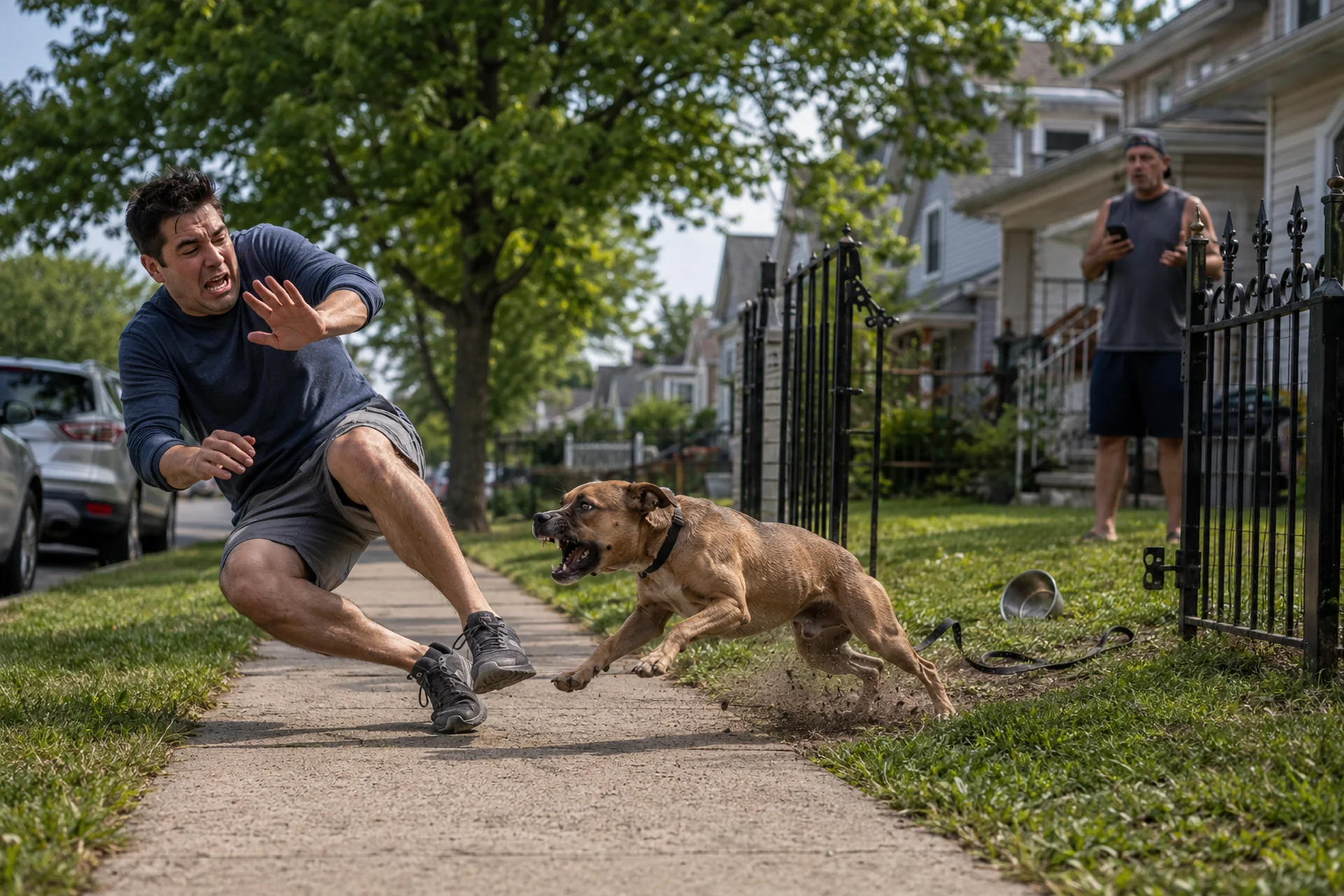
Suing for Injuries Caused by a Dog in New York
New York State's Agriculture and Markets Law ("AML § 123") § 123 is the primary statute governing dangerous dog designations. It creates a structured legal process through which a dog may be formally declared dangerous following a complaint and judicial hearing, and it imposes tiered civil and criminal liability on dog owners based on the severity of the attack and the dog's prior history. The statute governs both the administrative proceedings that follow an attack or threatened attack and the legal consequences that flow from them.
A dangerous dog designation can serve as the foundation for strict liability, heightened negligence penalties, and criminal exposure for the dog's owner, and it is a powerful tool for attack victims pursuing fair compensation. The difference between a civil penalty of a few hundred dollars and criminal misdemeanor liability can turn entirely on whether a prior dangerous dog finding is on record.
Critically, AML § 123(12) expressly preserves all common law and statutory causes of action. The statute operates alongside a victim's other legal options, not instead of them. A dog attack victim in New York may pursue a claim under AML § 123 in combination with any applicable common law negligence theory or other statutory right of recovery.
In This Article
Liability for Injuries Caused by Dangerous Dogs
Strict Liability for Medical Expenses
Once a dog has been formally designated "dangerous", its owner or lawful custodian is strictly liable under AML § 123(10) for all medical costs resulting from injury caused by that dog to a person, companion animal, farm animal, or domestic animal. Strict liability means there is no need to prove that the owner was negligent in the particular incident. The owner may escape strict liability only in the circumstances enumerated in AML § 123(4) and AML § 123(11).
Negligence Claims Against Dog Owners
For dogs that have not yet been designated dangerous, AML § 123 imposes civil penalties on the negligent owner based on injury severity: up to $400 where the bite causes physical injury to a person, service dog, guide dog, or hearing dog under § 123(6), and up to $1,500 where the bite causes serious physical injury to a person under § 123(7). These are statutory fines imposed on the owner. They are not the victim's compensation and do not cap what a victim may recover in a civil lawsuit. A victim's financial recovery comes from a personal injury claim for the full range of damages, which exists alongside and independently of whatever penalty the owner faces under the statute.
Following a dangerous dog determination, a court may also require the owner to maintain a liability insurance policy in an amount it deems appropriate, up to a maximum of $100,000 for personal injury or death resulting from an attack by the dog. That requirement directly affects a victim's ability to collect on a judgment.
Evidence Commonly Used in Dangerous Dog Injury Cases
Witness Statements
Accounts from bystanders, the injured person, or others present at the scene establish the sequence of events, the dog's behavior immediately before and during the attack, and whether any provocation occurred. These statements are foundational to both the dangerous dog complaint process and any subsequent civil claim.
Animal Control and Police Reports
Official reports document the incident contemporaneously, often including the responding officer's observations about the dog's demeanor, any history of prior complaints involving the same dog, and whether the officer believed the dog posed a continued danger. A prior dangerous dog finding recorded in these reports is particularly significant for establishing heightened liability.
Medical Records
Medical records establish the nature, extent, and treatment costs of the human victim's injuries. They are essential to distinguishing between physical injury, which triggers the lower civil penalty tier, and serious physical injury, which triggers the higher penalty tiers and potential criminal exposure for the owner.
Veterinary Records
Where a companion animal, farm animal, or domestic animal was also injured in the attack, veterinary records document those injuries and support claims for veterinary expenses as an element of damages.
Photographs and Video Evidence
Visual documentation of the attack, the dog's behavior, the victim's injuries, and the conditions at the scene can corroborate witness accounts and establish facts that are otherwise difficult to convey through testimony alone.
Prior Bite Incidents and Dangerous Dog Findings
A dog's prior history is directly relevant to the liability analysis. Evidence of prior complaints, prior bites, or a prior dangerous dog finding can support heightened liability claims, establish the owner's knowledge of the dog's propensities, and in the most serious cases shift the applicable liability tier from a civil penalty to criminal exposure.
Compensation Available After a Dog Attack
Medical Expenses
Emergency room treatment, surgery, hospitalization, medication, follow-up care, and physical therapy are recoverable economic damages. Where the attack causes long-term or permanent physical consequences, ongoing and future medical costs are also compensable.
Lost Income
A victim who misses work during recovery, or whose injuries prevent a return to their prior occupation, may recover lost wages and, where appropriate, diminished earning capacity going forward.
Pain and Suffering
Physical pain experienced as a result of the attack, during treatment, and on an ongoing basis if injuries are chronic is a recognized category of non-economic damages in New York personal injury claims.
Scarring and Disfigurement
Dog bites frequently cause permanent scarring, especially to the face, hands, and arms, which are the areas most commonly exposed during an attack. Scarring and disfigurement are treated as distinct elements of non-economic damages and can represent a significant portion of total recovery.
Emotional and Psychological Harm
The psychological consequences of a violent animal attack, including anxiety, post-traumatic stress disorder, phobias, and disruption to daily life, are compensable in personal injury litigation and are not limited to victims who also sustained physical injuries.
Veterinary Expenses for Injured Pets
Where a companion animal, farm animal, or domestic animal was injured in the attack, the owner may recover reasonable veterinary costs. Where the owner of the attacking dog carries a prior dangerous designation, strict liability under AML § 123(10) attaches to those veterinary costs as well as medical costs for human victims.
Common Defenses Raised in Dangerous Dog Cases
AML § 123(4) identifies four circumstances under which a dog's conduct will be treated as legally justified, preventing both a dangerous dog finding and liability under the statute. Owners routinely assert one or more of these defenses after an attack.
Trespassing
The trespass defense requires that the person bitten was committing a specific crime or offense on the owner's or custodian's property at the time of the attack. Courts apply the word "crime" as it is legally defined. A victim who entered the property with permission, was there on lawful business, or simply acted carelessly near the dog does not satisfy the defense. The statute does not extend to comparative fault or general negligence on the victim's part, and an owner who cannot identify specific criminal conduct falls outside the defense's scope entirely.
Provocation Claims
When an owner asserts provocation, the central question is whether the triggering conduct was meaningful, directed at the dog, and proportionate to the response the dog gave. Accidental contact, routine movement near the dog, or simply startling the animal does not qualify. Owners frequently assert provocation broadly after an attack, but the same behavioral evidence that supports the victim's claim, including the dog's demeanor, the sequence of events captured by witnesses or video, and any prior history of aggression, often demonstrates that the dog's response bore no reasonable relationship to what the victim did.
Self-Defense and Protection of Others
A separate and broader exemption applies under AML § 123(11), which operates independently of the justification defenses covered above. Where the attack occurred in defense of a person during the commission or attempted commission of a serious violent felony enumerated in the statute, the owner is exempt from the civil and criminal liability provisions of subdivisions 6 through 10. This exemption is tied to the physical location of the criminal act and a specific list of qualifying felonies. Courts evaluate whether the qualifying felony was being committed at the time of the attack, not merely alleged after the fact to neutralize a civil claim.
Statute of Limitations for Dog Bite and Dangerous Dog Claims in New York
New York dog bite and dangerous dog attack claims are governed by the three-year personal injury statute of limitations under CPLR § 214(5). The clock begins running on the date of the attack. A victim who fails to commence a civil action within three years permanently loses the right to sue, regardless of the severity of the injuries or the strength of the evidence.
Acting promptly also serves a practical purpose independent of the legal deadline. Witness recollections fade, surveillance footage is overwritten, animal control records may be purged, and the dog's subsequent history, including any additional incidents that would support heightened liability, becomes harder to document the longer a victim waits. Starting the investigation while those sources are still accessible strengthens every element of the claim.
Dog Bite Injury Lawyer in New York
The personal injury attorneys at Sternberg Injury Law Firm can handle claims on behalf of dog attack victims and their families throughout New York. Our firm offers free consultations and can be reached by phone, text, email, or website submission. The team at Sternberg Injury Law Firm speaks many languages and may be able to come to the client's location when needed.
Frequently Asked Questions About New York Dangerous Dog Laws
New York courts have recognized that an owner's knowledge of prior aggressive behavior, specifically conduct that stopped short of a bite but reasonably put the owner on notice, can support a common law negligence claim even when the dog has no formal history of being aggressive. The absence of a prior attack forecloses strict liability for medical costs and limits which penalty tiers apply under the statute, but it does not bar a civil recovery where negligence can be established on the facts.
Best if you consult with counsel first. Request the case number and the name of the assigned officer. Ask whether the dog has any prior complaints or findings on record. Keep copies of all documents provided to or received from animal control. The outcome of the investigation, including any dangerous dog finding, can become central evidence in a subsequent civil claim, so the accuracy and completeness of the initial report matters.
Yes, but not in the same way as when dogs attack humans. When an animal is injured by another dog, New York courts have recognized negligence-based claims against the attacking dog's owner for the resulting veterinary costs. Unlike human injury claims, animal injury recovery is generally limited to economic losses, specifically the actual cost of veterinary treatment, rather than pain and suffering or other non-economic categories. Whether the attacking dog carries a prior dangerous designation affects the applicable liability theory and how straightforward the claim is to establish, but a recovery path exists either way.
No. Pain and suffering, scarring, lost income, psychological harm, and future care costs each require separate proof of the nature and extent of the harm. A finding resolves whether the dog was dangerous and simplifies the liability side of a medical cost claim, but a victim who stops there and does not independently document the full scope of injuries leaves the most significant portions of a potential recovery unproven. The finding is a strong starting point, not a verdict on damages.