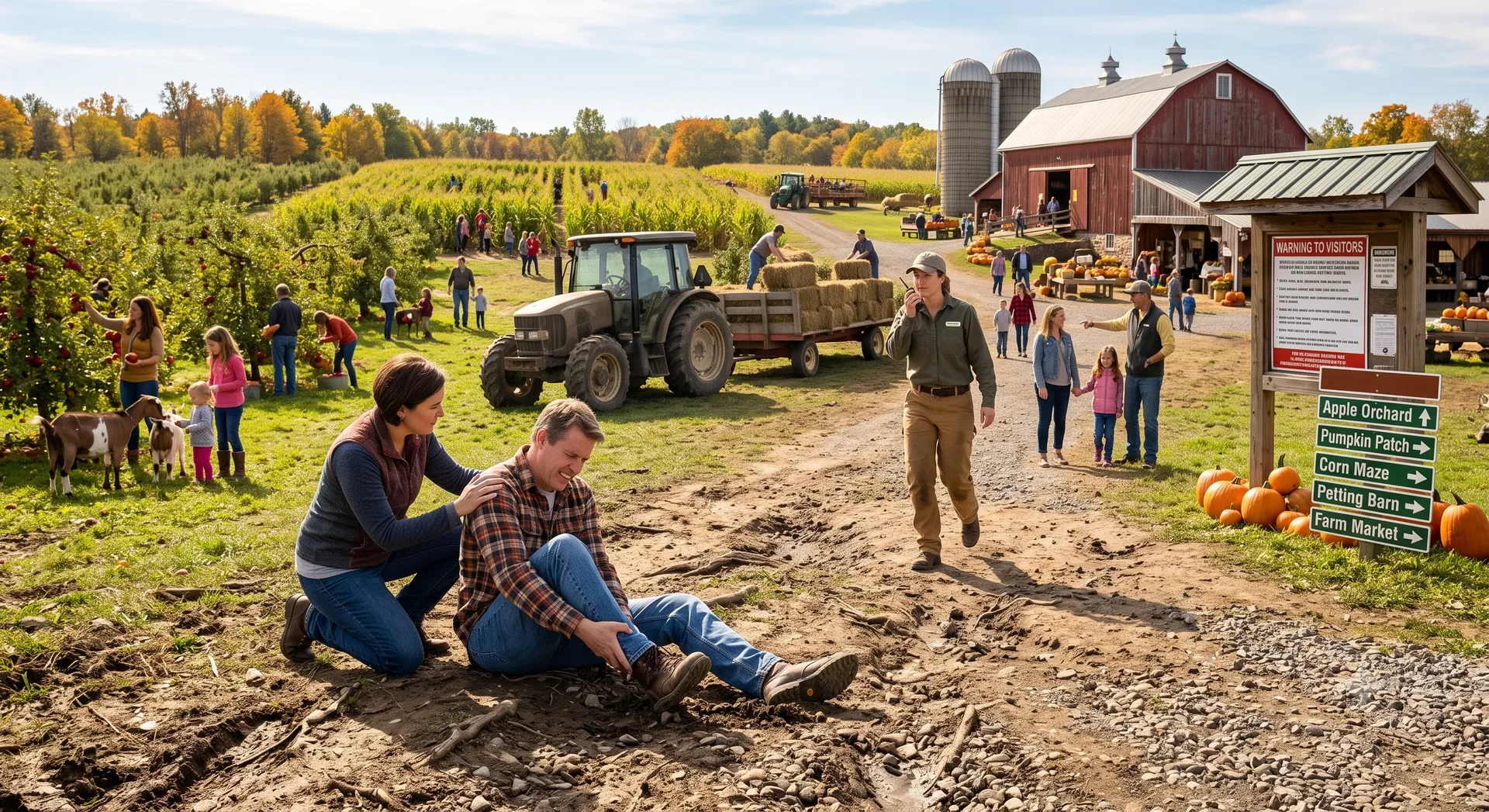
Suing for Injuries at Agricultural Tourism Areas in New York
New York law imposes specific safety, signage, and warning obligations on operators of agricultural tourism attractions, such as farms, orchards, corn mazes, and pumpkin patches. When an operator fails to meet those obligations, an injured visitor may be able to pursue compensation. Many visitors who get hurt at these attractions assume the injury was simply bad luck, an unfortunate accident that comes with visiting a working farm. In reality, options may be available depending on what the operator did, or failed to do.
In This Article
Liability at Agricultural Tourism Areas in New York
General Obligations Law § 18-303 applies to farms, orchards, and similar attractions that welcome the public for agricultural tourism activities, including hayrides, corn mazes, pumpkin patches, u-pick operations, petting zoos, and farm tours. The law was enacted as part of New York's Safety in Agricultural Tourism Act, and it places several specific responsibilities on the operators of these attractions.
Operators are required to post way finding signage marking the areas of the property that are open to visitors and the safe paths for reaching them. They must adequately train employees who are involved in agricultural tourism activities. They must post a conspicuous "Warning to Visitors" relative to the inherent risks of farm activities at every point of sale or ticket distribution. They must also post notice of a visitor's own responsibilities under the statute, and notice of a visitor's right to a refund for unused, intact tickets if the visitor decides not to participate because of the disclosed risks.
When an Injured Visitor Can Still Recover Compensation
GOB § 18-303 protects operators from liability for a visitor's injury or death, but only if the operator has met all of its obligations under the law. This protection is conditional, not automatic. An operator that skipped a required warning, failed to train staff, or otherwise fell short of what the statute demands cannot rely on the statute to shield it from responsibility.
The statute also requires operators to take reasonable care to prevent reasonably foreseeable risks to visitors, consistent with a landowner's general duty to keep premises reasonably safe for intended and foreseeable uses. A visitor who is injured because an operator failed in this duty, in addition to or apart from the signage and training requirements, may still have a claim.
Visitors do have their own responsibilities under the statute, including exercising reasonable care regarding disclosed risks and following posted signs and rules of conduct.
Common Ways Agricultural Tourism Operators Fail to Meet Their Legal Obligations
Many visitor injuries at farms, orchards, and similar attractions can be traced back to an operator's failure to satisfy the basic requirements the law imposes. Recognizable examples include:
- Missing or inadequate "Warning to Visitors" signage at the point of ticket sale, leaving visitors unaware of the inherent risks of the activity they paid to participate in
- Poor or absent way finding signage, so visitors cannot tell which paths and areas are safe and which are off limits
- Staff supervising hayrides, animal encounters, or other tourism activities who were never adequately trained for the role
- Known hazards on the property, such as unstable equipment, aggressive animals, or dangerous terrain, that went unaddressed despite being reasonably foreseeable
- No posted notice of visitor responsibilities or the right to a refund for unused tickets
Types of Injuries That Commonly Occur at Agricultural Tourism Areas
Agricultural tourism attractions carry unique risks not found in typical retail or hospitality settings. The following categories represent some of the most common injuries visitors sustain at these locations.
Hayride and Farm Equipment Accidents
Hayrides, tractors, and other equipment used in farm tours and attractions can cause serious injuries when seating is improperly secured, drivers move too quickly, or equipment is poorly maintained. Falls from moving wagons or equipment are among the most common sources of harm in this category.
Animal-Related Injuries
Petting zoos, animal encounters, and livestock areas expose visitors, often children, to bites, kicks, and trampling. These injuries frequently occur when animal enclosures are inadequately secured or when staff fail to properly supervise interactions between visitors and animals.
Slip, Trip, and Fall Hazards
Working farms present natural hazards that are not always obvious to visitors, including uneven terrain, muddy paths, exposed roots, and unmarked drop-offs. Without adequate signage or maintenance, these hazards can lead to serious falls.
Corn Maze and Attraction Injuries
Corn mazes, pumpkin patches, and other seasonal attractions often operate in low light or after dark, and poor lighting, inadequate signage, or a lack of supervision can leave visitors disoriented and vulnerable to falls or collisions with obstacles.
Falls From Structures or Play Areas
Barns, hay lofts, play structures, and other elevated attractions are common draws at agricultural tourism venues, and falls from these structures can result in serious injuries, particularly when guardrails, netting, or other safety features are missing or poorly maintained.
How an Attorney Can Help After an Agricultural Tourism Injury
Investigating a claim under GOB § 18-303 typically involves reviewing what signage and warnings were actually posted at the property and point of sale, gathering witness statements and incident reports from the day of the injury, and evaluating whether the operator met its safety, training, and warning obligations at the time the visitor was hurt.
This investigation is what determines whether the operator's liability protection under the statute applies, or whether a shortfall in the operator's compliance leaves the door open for a valid claim.
Sternberg Injury Law Firm PC
Injured visitors, or the families of visitors who suffered serious harm at a farm, orchard, or other agricultural tourism attraction, can contact the Sternberg Injury Law Firm for a free consultation. Our attorneys can investigate whether the operator met its obligations under New York law and help injured visitors pursue the compensation they deserve. The Sternberg Injury Law Firm handles cases on a contingency fee basis, meaning clients pay nothing unless the firm recovers compensation on their behalf. Acting promptly protects the evidence and witness accounts that an investigation depends on.
Frequently Asked Questions About Agricultural Tourism Injury Claims in New York
Often, yes. A waiver may limit certain claims, but it generally cannot shield an operator from liability for its own failure to comply with GOB § 18-303's signage, training, and warning requirements, or for gross negligence. An attorney should review the specific waiver before assuming it bars recovery.
The statute's obligations turn on whether the location qualifies as an agricultural tourism area, not on how the visit was booked. A private group on a field trip or birthday outing is owed the same signage, training, and warning obligations as any visitor purchasing an individual ticket.
Possibly. New York follows a comparative negligence rule, so a visitor's own conduct can reduce, but does not automatically eliminate, available compensation if the operator also fell short of its obligations. An operator cannot escape responsibility for missing signage or untrained staff simply by pointing to the visitor's own actions.