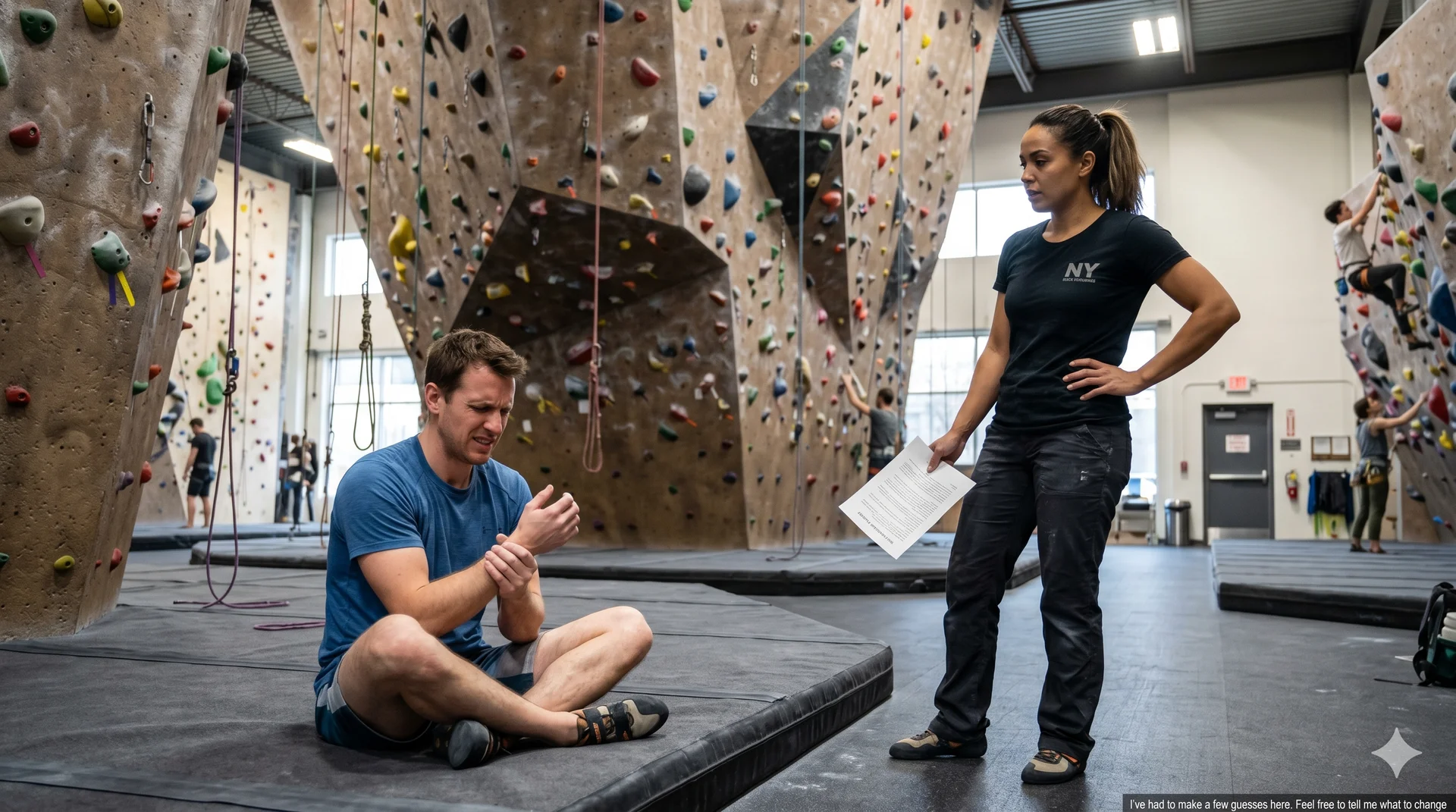
When signing up for a gym or pool facilities or entering an amusement park, the facility typically requires the participant to sign a waiver. This waiver typically has a lot of fine print, but most importantly it states that the facility is not responsible for injuries that occur in their premises. When someone ends up getting hurt due to the negligence of the facility, the lawyers for the facility or its insurer typically point to that document and treat it as if it ends the case. In many situations, that conclusion is wrong. New York General Obligations Law (GOB) § 5-326 limits the ability of recreational facilities to use a signed waiver to escape responsibility for injuries caused by their own negligence.
In This Article
Facilities and Situations Covered by GOB § 5-326
GOB § 5-326 applies to owners and operators of places of recreation or amusement that charge a fee for the use of their facilities or equipment. In practice, that reaches commercial gyms and fitness centers, swimming pools, rock climbing facilities, trampoline parks, bowling alleys, skating rinks, batting cages, go-kart tracks, amusement parks, and similar venues. The common thread is that the location exists for recreational or entertainment activity and customers pay to use the facility. A customer who purchased a membership, bought a day pass, or paid an admission fee at any such location satisfies the threshold requirement for the statute to apply their case.
The law protects the facility's paying customers. It draws a direct line between the fee a customer pays for access and the duty of care the facility owes in return. When a facility fails to meet that duty and a customer is hurt as a result, a signed waiver is not always the barrier to recovery.
Liability Waivers and Why Facilities Use Them
A liability waiver is a document customers are asked to sign before using a recreational facility. In legal terms, it is a pre-injury release: a written agreement in which the customer agrees in advance to give up the right to hold the facility responsible for harm that occurs during their use of it. Gyms call them "membership agreements". Pools and amusement parks call them "terms and conditions" or "release forms". The name changes but the purpose is the same.
Facilities use waivers for a simple reason: they want to reduce or eliminate the cost of injury claims before any claim arises. If a customer signs a document saying they will not hold the facility responsible for injuries, the facility hopes that document will function as a legal barrier between a customer's future injury and the facility's financial responsibility.
A waiver is not the same thing as assuming the risk of an activity. Assumption of risk is a legal doctrine that says a person who voluntarily participates in an activity accepts the dangers that are inherent to it. Someone who engages in a contact sport accepts the risk of contact. That principle is built into the common law and does not depend on any document signed at the front desk. A waiver is a contract. It is an attempt by the facility to go further than assumption of risk allows, by eliminating liability not just for inherent dangers but for harms caused by the facility's own careless conduct.
Signing a Waiver Does Not Always Protect the Facility
Under New York law, GOB § 5-326 voids any agreement by which a recreational facility purports to exempt itself from liability for injuries caused by its own negligence. When a waiver attempts to do that, it is unenforceable as a matter of law. The facility cannot rely on it to dismiss an injured person's claim.
This protection exists regardless of the circumstances under which the customer signed. GOB § 5-326 operates as a matter of public policy, not as a matter of what any individual customer knew or intended at the time of signing.
When a facility or its insurer tells an injured person that a signed waiver ends their claim, that conclusion may have no legal basis. Many injured people accept it without question. That outcome is not accidental. It is the strategy.
GOB § 5-326 renders a waiver void specifically as to the facility's own negligence. A waiver that attempts to excuse a facility from responsibility for a hazard it created, a condition it failed to fix, or supervision it failed to provide, cannot be enforced for that purpose. There are narrow circumstances where a waiver may still carry some weight, particularly when the harm results from an inherent risk of the activity that the customer voluntarily assumed rather than from any fault of the facility. When the cause of the injury traces back to the facility's own conduct, the waiver fails.
Types of Negligence a Facility Can Be Held Responsible For
GOB § 5-326 preserves an injured person's right to recover for injuries caused by the facility's failure to meet its duty of care. That covers a broad range of conduct and conditions:
- Equipment that was defective, improperly maintained, or left in a broken condition and made available for customer use
- Failure to properly inspect the facility and identify safety hazards before customers encountered them
- Wet floors, slippery surfaces near pools or locker rooms, and other correctable conditions that were not fixed or flagged
- Absence of required safety personnel, including lifeguards at pools or trained monitors at supervised activities
- Overcrowding or scheduling practices that created unsafe conditions during use
- Failure to enforce the facility's own safety rules, where enforcement would have prevented the type of injury that occurred
These are failures the facility could have corrected. They are not dangers inherent to the activity itself, and that distinction matters.
GOB § 5-326 does not transform every recreational injury into a viable claim. A broken finger during a properly supervised martial arts class where the instructor followed appropriate protocols and the equipment was maintained may not establish negligence on the facility's part. A ball striking someone during correctly supervised batting practice with equipment in safe condition follows the same analysis. The statute does not override the concept of inherent risk when that is genuinely what is involved.
What the Waiver Language and Signing Circumstances Mean
The specific language of the waiver does not determine the outcome. Courts look at what the waiver attempts to accomplish, not just how it is phrased. Phrases like "to the fullest extent permitted by law" or "including any injury resulting from negligence" do not cure the defect. If the practical effect of the waiver is to eliminate the facility's liability for its own negligence, the language does not save it.
Whether a customer reads the waiver before signing is equally irrelevant. GOB § 5-326 is enforced because an agreement of that type is void as a matter of New York public policy, not because of what any individual customer understood when they signed the form.
Whether the injury happened during a supervised class or during independent use of the facility does not change the legal standard. The question in either context is the same: whether the facility's negligence caused the harm. The structure of the activity is not the relevant variable. The facility's conduct is.
Landmark New York Cases Under GOB § 5-326
Blanc v. Windham Mountain Club
Blanc is one of the earliest decisions to apply GOB § 5-326 directly to a recreational facility's release. In 1982, the court held that the statute voided a release signed by a skier, finding that the mountain club's attempt to exempt itself from liability for injuries caused by its own negligence was precisely what the legislature intended to prohibit. For an injured person, Blanc establishes the foundational principle: a recreational operator cannot, simply by obtaining a pre-injury signature, transfer to the customer all responsibility for conditions the operator controls. The statute existed to prevent that outcome, and the court applied it to do so.
Lux v. Cox
Lux in 1998, addressed the enforceability of a waiver in a fitness facility context under GOB § 5-326. The court's analysis focused on whether the facility qualified as a covered recreational venue under the statute, reinforcing that the statute's application turns on the nature of the facility and whether a fee is charged, not on the formal label the facility assigns to its agreements. The decision is useful for an injured person because it confirms that a facility cannot escape the statute's reach by characterizing its agreements in creative ways.
Debell v. Wellbridge Club Management
Debell in 2007 is one of the most directly applicable decisions for health club members. The First Department Appellate Division applied GOB § 5-326 to void a waiver signed by a health club member who was injured while using the club's exercise equipment. The court rejected the argument that the release barred the negligence claim, finding that the facility's failure to maintain safe equipment was precisely the type of negligence the statute was designed to keep compensable. Debell remains a frequently cited authority for the proposition that a health club's waiver cannot shelter it from responsibility for its own maintenance failures. For someone hurt by gym equipment and told the waiver ends their claim, Debell is the decision a personal injury attorney will point to in making a case for their client.
What to Do If You Were Injured at a Recreational Facility
The first thing an injured person needs to understand is that a signed waiver does not necessarily end the claim. A denial based on that document should not be accepted without having an attorney evaluate whether the waiver is enforceable.
Several steps protect the value of a claim while evidence is still available:
- Document the scene while the evidence is fresh. Photographs of the location where the injury occurred, the equipment or surface involved, and any visible condition that contributed to what happened preserve facts the facility has no obligation to maintain. Witness contact information should be collected immediately.
- If the facility filed an incident report, request a copy. The facility has no obligation to preserve it indefinitely.
- Any additional releases or settlement documents that the facility or its insurer presents after the injury should not be signed. Those are not administrative forms.
- Medical treatment should begin promptly, and records should be preserved from the outset. The diagnosis and treatment history form the foundation of the injured person's damages.
- An attorney should be consulted as soon as practically possible but for sure before the statute of limitations closes the claim. In New York, most personal injury claims must be filed within three years of the injury. That deadline is firm.
Contact Sternberg Injury Law Firm
When an injured person is told that a signed waiver ends their options, that conclusion deserves scrutiny. GOB § 5-326 is a meaningful protection under New York law, but it does not apply itself. It requires an attorney who can evaluate the specific waiver language, assess whether the facility's conduct qualifies as actionable negligence, and press the claim through to resolution.
The personal injury attorneys at Sternberg Injury Law Firm have handled premises liability and recreational facility negligence matters in New York. We can review the waiver, evaluate whether GOB § 5-326 renders it unenforceable, and pursue the claim. We offer free consultations at a location of your convenience and handle cases throughout New York State.
GOB § 5-326 Frequently Asked Questions
In many cases, yes. New York's GOB § 5-326 renders a waiver unenforceable when the injury was caused by the facility's own negligence. Whether the statute applies depends on the specific circumstances of the injury and the language of the waiver. An attorney can evaluate both.
Any fee-based facility designed for recreation or amusement, including gyms, health clubs, pools, trampoline parks, amusement parks, and similar venues. The two threshold factors are that customers pay to use the facility and that the location exists for recreational or entertainment activity. Courts have applied this definition broadly rather than allowing facilities to argue their way out of coverage.
No. GOB § 5-326 renders the relevant portions of a waiver void as a matter of public policy. Whether the customer reads the document, understands its terms, or signed it quickly without reviewing it has no bearing on whether the statute applies.
Yes, in limited circumstances. A waiver may carry some weight when the injury results solely from the inherent risks of the activity the customer voluntarily chose to participate in, rather than from the facility's own negligence. GOB § 5-326 specifically targets waivers that purport to excuse the facility's own fault. Where inherent risk is genuinely what caused the injury, the analysis is different.
Assumption of risk is a legal doctrine that applies to dangers inherent to the activity a person voluntarily chose to participate in, regardless of any document signed. A liability waiver is a contract that attempts to go further, eliminating the facility's responsibility for harms caused by its own negligent conduct. GOB § 5-326 limits the waiver's reach in covered facilities without disturbing the assumption of risk doctrine.