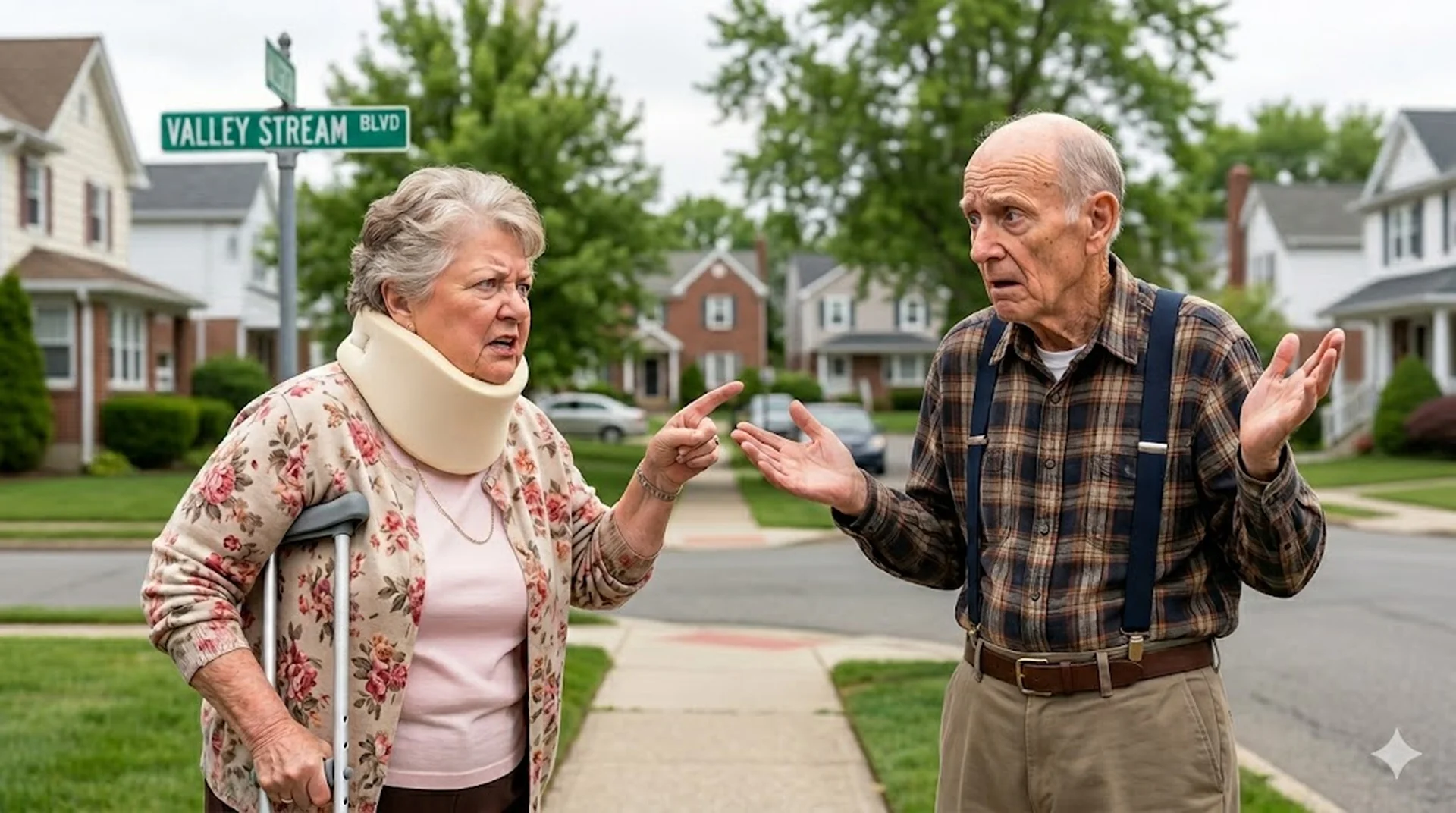
Marriage does not suspend the law of torts in New York. A spouse who negligently or intentionally injures the other is exposed to civil liability in the same way any third party would be. That principle is codified in New York General Obligations Law (GOB) § 3-313, which abolished the common law doctrine of interspousal tort immunity and granted each spouse an independent right of action for personal injury. The statute also reaches certain property damage and injury-to-character claims, but for most injured people the critical question is whether they can pursue a bodily-injury claim against a spouse's negligence or intentional misconduct after a car accident, fall, assault, or other serious incident.
In This Article
Understanding GOB § 3-313
The core of GOB § 3-313 is straightforward: if one spouse causes serious bodily injury to the other, the case is handled just as it would be between strangers. The statute reaches three categories of harm—injury to the person, injury to property, and injury to character—but in practice personal injury claims are usually front and center. Those claims include motor vehicle negligence, falls, assault and battery, and any other tortious conduct that causes physical harm or bodily injury. Property damage claims cover the destruction, conversion, or wrongful interference with a spouse's separate property, and injury to character encompasses defamation and related reputational torts. In each category, the injured spouse has a right of action as if the marriage did not exist.
GOB § 3-313 affects any married individual, whether a wife bringing a claim against her husband, a husband bringing a claim against his wife, or a third party suing one spouse for a tort allegedly instigated by the other. The statute was originally framed around married women's rights, reflecting the legislative history of the Married Women's Acts, but its protections operate symmetrically between spouses under contemporary application.
Practical situations where the statute is invoked include: a passenger spouse injured when the driver spouse causes a collision; a spouse who sustains injuries from domestic violence; property intentionally damaged or destroyed by the other spouse; and cases where one spouse's negligence exposes the injured spouse to liability for a third party's harm. In each scenario, GOB § 3-313 supplies the threshold authority to bring the claim.
What Are Interspousal Tort Claims?
An interspousal tort claim is a civil lawsuit brought by one married person against the other for tortious conduct. The term "interspousal" simply identifies the parties as spouses; it does not describe a separate category of tort law. The underlying legal theories, negligence, intentional infliction of harm, conversion, and others, are the same doctrines that apply between any two parties. What was historically different was the rule that barred married individuals from pursuing those claims against each other entirely.
Under GOB § 3-313, each spouse is legally independent for purposes of tort liability. A married person holds property, acquires rights, and bears obligations separate from the marital unit. A tort claim between spouses does not merge into or become part of the marital estate; it is a personal legal action that belongs to the injured spouse individually, enforceable in the same courts through the same procedures as any other civil tort claim.
A tort claim under GOB § 3-313 is distinct from a matrimonial proceeding. Divorce, legal separation, and annulment are governed by Domestic Relations Law and resolve issues of marital status, property distribution, and support. A tort action under GOB § 3-313 addresses compensatory and, where warranted, punitive damages for a specific wrongful act. The two proceedings can run concurrently in Supreme Court, but they are separate actions with separate standards of proof and separate remedies.
Suing a Spouse for Injury and Liability Under GOB § 3-313
Before the New York Legislature enacted what became GOB § 3-313, the common law doctrine of interspousal immunity barred tort suits between husbands and wives on the theory that spouses were a single legal entity and could not sue each other. New York abolished that doctrine, and the statute now expressly provides that a married woman has a right of action against any person for an injury to her person, property, or character as if she were unmarried. The phrase "as if she were unmarried" is the operative language: it removes the marital relationship as a legal barrier to suit.
GOB § 3-313 includes a coercion provision governing liability between spouses in the reverse direction. A husband is not liable for his wife's torts by reason of the marriage alone. If a plaintiff seeks to hold a husband responsible for a tort committed by his wife, actual coercion or actual instigation by the husband must be proved. The coercion or instigation cannot be presumed from the fact of the marital relationship. This provision allocates the burden of proof and prevents courts from imputing vicarious liability to one spouse for the other's independent tortious acts simply because of the marriage.
When Spousal Tort Claims Are Viable
A tort claim between spouses is enforceable when it arises from independently tortious conduct, meaning conduct that would give rise to a cause of action between unrelated parties under established tort principles. A husband who runs a red light and injures his wife as a passenger in a car crash has committed negligence; she has a viable personal injury claim regardless of the marriage. The same is true for a spouse injured in a fall caused by dangerous conditions negligently maintained by the other spouse, or a spouse who is the victim of domestic violence. A spouse who destroys the other's separate property has committed conversion; the property owner has a viable conversion claim. The critical question is whether the alleged conduct constitutes a cognizable tort independent of the marital relationship.
Claims that arise inherently and exclusively out of the marital relation itself occupy a different position. New York courts have long recognized that certain obligations exist only because of the marriage: the duty of consortium, the expectation of cohabitation, and related domestic duties. Where the alleged wrong is inseparable from those marital obligations rather than from independently tortious conduct, courts are far more reluctant to permit the claim to proceed as a standalone tort action. Attempting to reframe a domestic grievance as a tort without an independently wrongful act will not survive a motion to dismiss.
Common Issues in Spousal Tort Cases
Interspousal tort cases present procedural and evidentiary challenges that do not appear in typical third-party claims. The factual record in a marital tort case is often contested on multiple levels simultaneously: whether the underlying act occurred, whether it constitutes a tort, and whether defenses grounded in the relationship apply. Discovery frequently implicates privileged communications, and courts must carefully separate what is admissible from what the marital communications privilege shields.
Insurance coverage is a recurring and frequently dispositive issue in spousal tort litigation. Standard automobile policies and homeowners policies often contain exclusions for claims between household members or family members. Whether such an exclusion applies to the specific claimant and the specific conduct at issue requires close analysis of the policy language. An exclusion drafted broadly enough to bar all household member claims may be enforceable; exclusions that conflict with the policy's insuring agreement or with public policy constraints imposed by New York Insurance Law may be challenged. In automobile accident cases particularly, the interplay between GOB § 3-313 and policy exclusions can determine whether any recovery is practically achievable. In addition to these coverage questions, an injured spouse in a motor vehicle case must still satisfy New York's No-Fault "serious injury" or basic economic loss thresholds; GOB § 3-313 removes the marital bar to suit, but it does not change those separate requirements for pursuing pain-and-suffering damages.
The timing of a spousal tort claim relative to separation or divorce also affects the practical landscape of the litigation. A tort action is legally independent of the matrimonial proceeding, but in practice, courts often consolidate related actions pending in Supreme Court, and the existence of contentious divorce proceedings can influence how a tort claim is perceived at trial. Defendants in spousal tort cases routinely argue that the claim is motivated by the divorce rather than genuine injury; plaintiffs must be prepared to address that argument with independent evidence that isolates the tortious conduct from the matrimonial dispute.
Landmark New York Cases Under GOB § 3-313
In Weicker, the New York Court of Appeals addressed the limits of spousal tort claims where the alleged wrong arose out of the marital relationship itself. The plaintiff sought damages and injunctive relief based on her husband's alleged adulterous relationship and related conduct, framing the claim as intentional infliction of emotional distress. The Court acknowledged that New York generally recognizes claims for intentional infliction of emotional harm, but held that strong public policy, including the Legislature's abolition of actions such as alienation of affections and criminal conversation, barred using tort law to litigate grievances that are inseparable from the marital relationship. Weicker is frequently cited for the principle that GOB § 3-313 removes the disability to sue a spouse for independently tortious conduct, but does not create new torts for conduct that is purely matrimonial in character.
State Farm Mut. Auto. Ins. v. Westlake
Westlake addressed what happens when a spousal tort claim runs into an insurance policy exclusion. The Court of Appeals examined whether a household exclusion in an automobile policy barring coverage for claims by family members could be enforced to defeat a wife's claim against her husband's policy after she was injured in a collision he caused. The court's analysis treated the coverage question as entirely separate from the underlying tort right created by GOB § 3-313: the statute establishes the right to sue, but whether that right can be satisfied through insurance proceeds depends on the policy language and its conformity with New York law. Westlake remains the leading authority for the proposition that an insurer's invocation of a household exclusion in a spousal auto claim is a coverage defense that must be specifically analyzed under both the policy terms and applicable Insurance Law requirements. Courts applying Westlake have consistently required insurers to demonstrate that the exclusion was clearly communicated and that its enforcement does not violate public policy constraints embedded in the mandatory coverage requirements that apply to automobile policies in New York.
Contact Sternberg Injury Law for Guidance on Spousal Tort Claims
Spousal tort claims under GOB § 3-313 require careful analysis of the underlying tortious conduct, applicable insurance coverage, the coercion provision where relevant, and the relationship between the tort action and any concurrent matrimonial proceeding. A misstep in any of these areas can affect the viability of the claim or the practical availability of a recovery.
The personal injury attorneys at Sternberg Injury Law Firm handle cases involving personal injury liability between spouses and understand the intersection of tort law, insurance coverage, and matrimonial proceedings that these claims present. We evaluate the facts, identify the applicable legal framework, and advise on how to protect your rights from the outset. We offer free consultations and can meet with you at your home, a hospital, or another location that works for you. Our team assists clients in multiple languages, including Creole, English, Hebrew, Hindi, Russian, Spanish, Urdu, Uzbek, and Yiddish.
GOB § 3-313 Frequently Asked Questions
Yes. GOB § 3-313 allows an injured spouse to bring a personal injury claim—most often for motor vehicle accidents, falls, or assaults—against the other spouse as if they were unmarried. The same statute also permits certain property damage and injury-to-character claims, but those are far less common than bodily-injury cases.
The statute covers personal injury, property damage, and injuries to character. This article focuses on personal injury claims between spouses—car crashes, unsafe conditions leading to falls, and physical assaults— because those are the types of cases most injured people face. GOB § 3-313 does not create enforceable tort claims for conduct that arises inherently out of the marital relation itself, such as alleged breaches of consortium obligations. Independent tortious acts committed by one spouse against the other fall squarely within the statute's reach.
Yes. Under GOB § 3-313, a husband is not liable for torts committed by his wife unless the plaintiff proves actual coercion or instigation. Coercion cannot be presumed solely from the marital relationship. The burden falls on the party asserting it to produce affirmative evidence of actual instigation.
When one spouse injures the other in a motor vehicle accident, GOB § 3-313 permits the injured spouse to bring a negligence claim as if the parties were strangers. Whether an insurance policy covers such claims is a separate question governed by the policy language and applicable exclusions, as addressed by the Court of Appeals in State Farm Mut. Auto. Ins. Co. v. Westlake.
A tort claim under GOB § 3-313 is legally independent of any matrimonial proceeding and is not extinguished by a divorce filing. The tort action can be pursued in Supreme Court while a divorce is pending. Timing relative to separation may affect practical considerations, particularly around insurance coverage and the collection of any judgment.