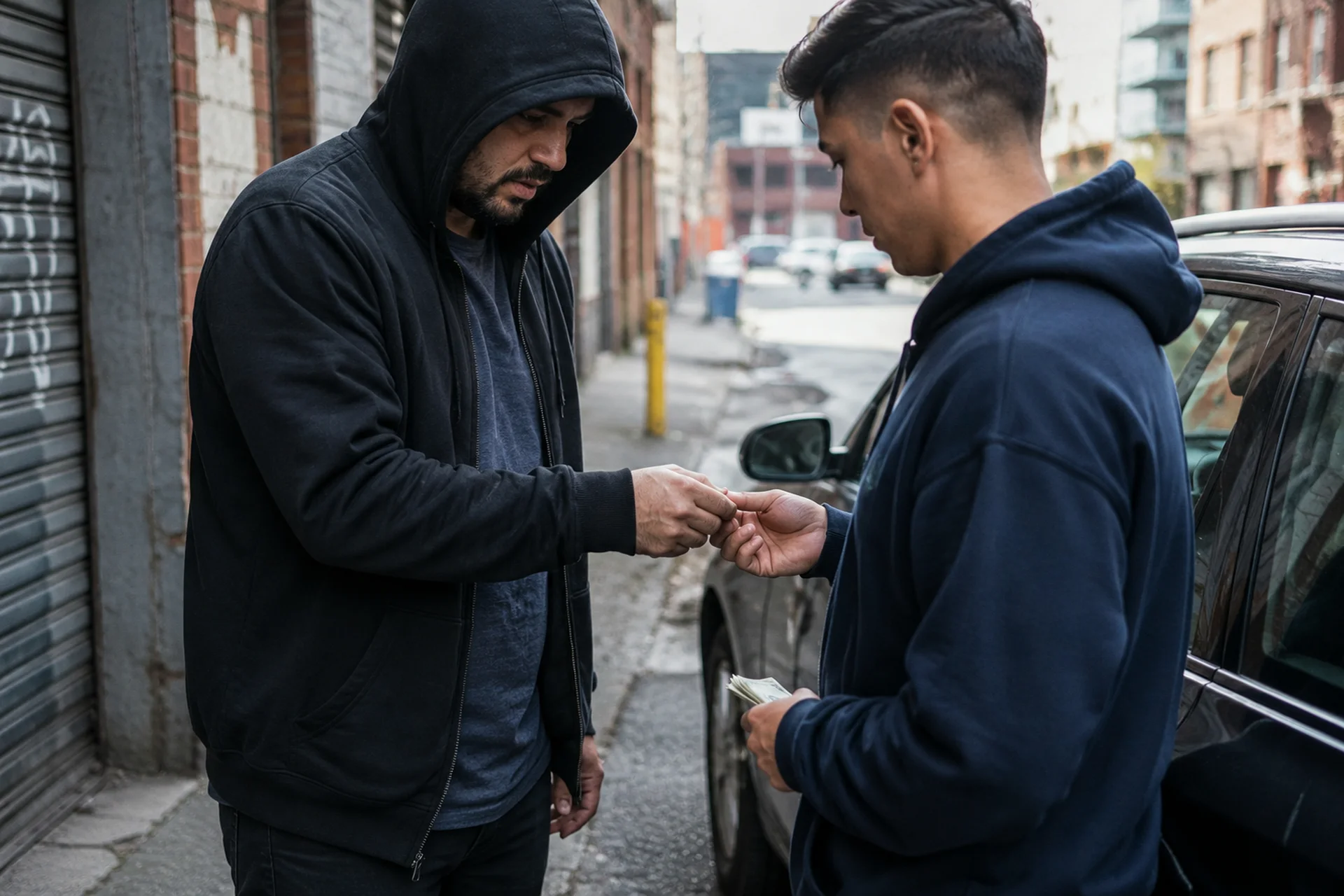
In New York State, General Obligations Law (GOL) § 11-103 creates a civil right of action for anyone injured by a person whose abilities were impaired by a controlled substance, where that impairment resulted from an unlawful drug sale or from unlawful assistance in procuring the substance. Often called New York's drug dram shop statute, the law gives injured people and surviving family members a direct legal path to hold the drug supplier accountable in civil court, separate from any criminal proceedings and independent of whether the impaired person who caused the harm can be sued or can pay.
In This Article
Understanding New York GOL § 11-103
The statute is part of New York's General Obligations Law and tracks the accountability structure of GOL § 11-101, the state's alcohol dram shop law. Section 11-101 imposes civil liability on those who unlawfully sell or provide alcohol to someone who then injures a third party. Section 11-103 extends that same accountability framework to illegal controlled substance transactions. Where a bar owner who over-serves a patron can face civil liability under § 11-101 when that patron drives drunk and injures someone, a drug dealer who sells to a user who then causes injury faces the same civil exposure under GOL § 11-103.
A family whose breadwinner was killed by a driver impaired by fentanyl-laced pills obtained from an illegal supplier has a claim against the driver, but they are often incarcerated, judgment-proof, deceased, or a combination of both. Under GOL § 11-103, there is a separate legal avenue to pursue the person who put the drug in the driver's hands.
The Five Subsections Under GOL § 11-103
Section 11-103 contains five operative provisions. Together they establish who can sue, what damages are available, how the claim survives the death of either party, where the action may be brought, and how parent suits are governed. A separate definitional provision ties the statute's scope directly to New York's controlled substances schedule.
GOL § 11-103(1)(a): The Right of Action
Any person injured by someone whose abilities were impaired by a controlled substance may sue whoever unlawfully sold or unlawfully helped procure that substance for the impaired person. The seller need not have directly handed over the drugs. Anyone who assisted in obtaining them can be held liable under this provision.
GOL § 11-103(1)(b): Recoverable Damages
The injured plaintiff is entitled to both actual damages, covering real economic and personal losses, and exemplary damages, which are punitive in nature and designed to punish the unlawful conduct of the seller or procurer of the controlled substance.
GOL § 11-103(2): Survival of the Action
The claim does end with the death of either party. If the injured person dies before the lawsuit is resolved, or if the defendant dies, the action continues through their respective estate. Any recovery flowing to a surviving spouse or child belongs to them alone as separate property, insulated from the other spouse's creditors or claims.
GOL § 11-103(3): Jurisdiction
A plaintiff may bring this action in any New York court with appropriate jurisdiction over the parties and subject matter.
GOL § 11-103(4): Parent Actions
When a child's injury entitles both parents to damages, either parent may bring the suit independently. If one parent obtains a recovery, the other is permanently barred from filing a separate action for the same harm.
GOL § 11-103(5): Controlled Substance Defined
The statute incorporates by reference the list of controlled substances in New York Public Health Law § 3306. As that schedule is updated, the scope of GOL § 11-103 automatically expands or contracts to match without requiring a separate amendment to the General Obligations Law.
How Each Subsection Works in Practice
GOL § 11-103(1)(a) requires the plaintiff to establish three things: that the defendant unlawfully sold or assisted in procuring a controlled substance, that the recipient's abilities were impaired by that substance, and that the impairment caused or contributed to the plaintiff's injury. "Unlawfully assisting in procuring" is broad enough to reach middlemen, co-buyers, and anyone who facilitated the transfer, including a person who pooled money to complete a transaction, drove someone to a pickup, or served as an intermediary. The impaired person who physically caused the harm is not the defendant under this statute; the claim runs against the supplier.
GOL § 11-103(1)(b) entitles the plaintiff to both actual damages, covering medical expenses, lost income, property loss, and loss of financial support where applicable, and punitive damages. Courts have discretion in awarding punitive damages, but the statute explicitly authorizes them, reflecting the legislature's intent to punish the underlying conduct and not merely compensate the injured party.
The survival provision in GOL § 11-103(2) carries the most practical weight in overdose and fatal accident cases. A family that loses a loved one to a drug-impaired driver retains the right to pursue the supplier through the decedent's estate. The recovery's classification as the surviving spouse's or child's sole and separate property matters where marital debt or creditor claims might otherwise reach those funds.
GOL § 11-103(3) presents no unusual complications for forum selection. The plaintiff may choose an appropriate New York state court based on the amount in controversy and the location of the parties or the injury.
Under GOL § 11-103(4), the bar-to-suit rule makes coordination between parents essential before either one files suit. The parent who obtains a recovery first extinguishes the other's independent claim for the same harm, though it does not necessarily extinguish any claim the child may have in their own right.
When GOL § 11-103 Does Not Apply
Several specific circumstances will defeat or substantially complicate a GOL § 11-103 claim. These are the situations where the statute provides no relief or where its reach is limited.
- The substance is not covered under PHL § 3306. Alcohol, over-the-counter medications, and other legal substances, even when misused, fall outside the statute. Alcohol-related civil liability is governed separately under GOL § 11-101.
- The sale or procurement was lawful. A licensed pharmacist who legally dispenses a controlled substance pursuant to a valid prescription does not face GOL § 11-103 liability even if the recipient later misuses the drug and injures someone. The statute applies only to unlawful transfers.
- Causation cannot be established. If the impaired person's drug use was incidental and the injury would have occurred regardless, the causal chain GOL § 11-103 requires is broken. The plaintiff must show that the impairment was a contributing cause of the harm, not merely that the defendant was impaired at the time.
- The defendant is the impaired person. Section 11-103 runs against the seller or procurer, not the person who consumed the drug and caused the harm. A separate negligence claim against that person may be available, but it does not arise under this statute.
- Both parents have already recovered under GOL § 11-103(4). Once one parent has obtained a judgment and recovered for the same harm, the other's independent action is permanently barred.
The Collection Problem: When the Dealer Has No Insurance
The most significant practical obstacle in GOL § 11-103 litigation is one the statute itself cannot solve: drug dealers are not exactly the type to carry liability insurance. Unlike a bar owner who violates GOL § 11-101 and may be covered under a commercial general liability policy, an illegal drug seller has no insurer. That said, a judgment under GOL § 11-103 is a legal instrument with its own enforcement tools, and a plaintiff who obtains one has several collection mechanisms available.
Judgment Liens on Real Property
Once a judgment is docketed in the county where the defendant owns real estate, it attaches as a lien on that property. The defendant cannot sell or refinance the property without first satisfying the lien. If the defendant has equity in a home or other real property, the plaintiff has a claim against that equity that travels with the land.
Bank Account Restraining Notices
A judgment creditor can serve a restraining notice on financial institutions where the defendant holds accounts. The bank is required to freeze funds up to the judgment amount. Combined with an information subpoena, a post-judgment discovery tool that compels the defendant to disclose assets under oath, this mechanism can surface accounts the defendant did not voluntarily reveal.
Wage Garnishment
If the defendant has legitimate employment, New York law permits garnishment of wages up to the limits set by Civil Practice Law & Rules Article 52. Modest garnishment over time can satisfy a judgment against a working defendant who has little in the way of liquid assets.
Information Subpoenas and Post-Judgment Depositions
Judgment creditors can compel defendants to answer written questions under oath about their assets, income, and property holdings. If the defendant refuses to respond or provides dishonest answers, they face contempt of court. A post-judgment deposition can uncover real property, business interests, vehicle titles, cryptocurrency holdings, and other assets that were not initially disclosed.
Seizure of Non-Exempt Personal Property
A sheriff or marshal can levy on and sell non-exempt personal property, including vehicles, electronics, and business equipment, to satisfy the judgment. New York law provides exemptions for certain property, but those exemptions are not unlimited, and property that exceeds the exemption amounts remains reachable.
Long-Term Enforcement: The 20-Year Window
A properly docketed New York judgment remains enforceable for twenty years and can be renewed. A defendant with no attachable assets today may receive an inheritance, a legal settlement, business income, or another windfall in the future. A judgment obtained now creates long-term leverage against future property acquisitions, banking relationships, and any legitimate income stream.
Collecting against an uninsured defendant who operates outside the formal economy requires persistence, skilled post-judgment enforcement counsel, and realistic expectations. Not every judgment will be fully satisfied. But the existence of a judgment creates durable leverage that can make eventual collection possible even when immediate assets are absent.
What to Do If Pursuing a GOL § 11-103 Claim
- Document the connection between the drug supplier and the impaired person as specifically as possible. Text messages, eyewitness accounts, social media communications, physical evidence, and records from any related criminal proceedings can all help identify the seller and establish the chain of supply.
- Preserve all evidence of the plaintiff's injuries, including medical records, lost wage documentation, property damage records, and, where death resulted, funeral expenses and financial support history.
- Identify any criminal charges filed against the supplier or the impaired person. Criminal proceedings generate police reports, grand jury materials, and plea allocutions that can be used in civil litigation and may contain admissions about the source and nature of the controlled substance.
- Gather information about the defendant's assets as early as possible. A defendant who learns of a civil suit may attempt to transfer or conceal property. Early identification of real estate holdings, business interests, and banking relationships improves the odds of eventual collection.
- Consult an experienced personal injury attorney as early as possible but most definitely before the statute of limitations expires. New York's general three-year limitations period for personal injury actions applies to GOL § 11-103 claims, and delay can permanently bar a claim regardless of its merits.
Drug Dealer Liability Lawyer in New York
The personal injury attorneys at Sternberg Injury Law Firm can represent injured people and surviving families throughout New York in claims arising from drug-impaired conduct. We offer free consultations to all and can meet with you at your home, a hospital, or another location that works for you. Contact us at your convenience.
NY GOL § 11-103 Frequently Asked Questions
Yes. A civil lawsuit does not have to wait for a criminal conviction or even an arrest. The two proceed on separate tracks, and waiting can hurt the civil case: New York's three-year filing deadline runs from the date of injury, not from when any criminal matter concludes.
Knowing who to sue is a practical requirement, but a civil lawsuit comes with its own investigative tools. A court can compel the impaired person to testify about where the drugs came from, subpoena phone records and communications, and develop information that investigators may never have pursued. Cases have been built on a supplier's identity established entirely through the civil discovery process.
No. The law only applies when the drug was sold or obtained illegally. Someone who filled a legitimate prescription at a pharmacy does not trigger supplier liability under this statute. A separate negligence claim against the impaired person may still be available through a different legal theory.
Not necessarily. Debts from willful and malicious injury are among the types that federal bankruptcy law does not allow to be wiped out. A judgment grounded in intentional drug dealing may survive a bankruptcy filing if the right steps are taken in bankruptcy court. An attorney would need to evaluate whether that applies to the specific facts of the case.
Yes, if the family member was an innocent victim killed or injured by a drug-impaired person. Their own drug use may come up in the damages calculation, but it does not automatically bar the family's claim against the supplier. The analysis differs if the person who died was the drug-impaired person who caused harm to others rather than a victim of that conduct.