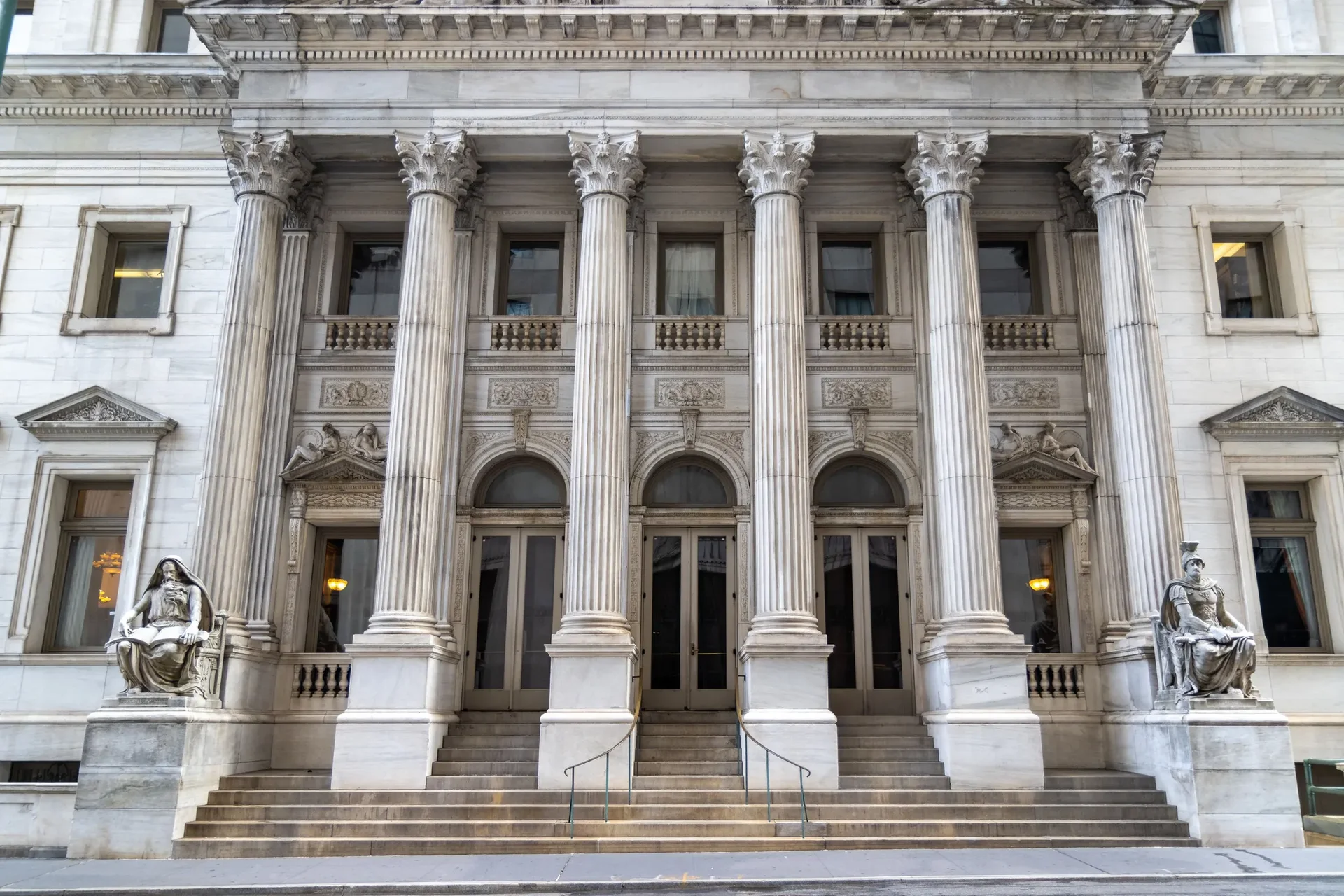
In the New York State civil justice system, a verdict or order from the trial-level court is not always the final word. When a party believes that the trial judge misapplied the law, allowed or excluded critical evidence, mishandled jury instructions, or presided over a verdict that cannot be squared with the record, the Civil Practice Law and Rules (CPLR) provide a structured appellate process.
For most cases, that process runs through the "Appellate Division", the intermediate appellate court that sits above the trial courts and below the Court of Appeals. The Appellate Division does not conduct a new trial. It reviews the "record" on appeal under defined standards of review and has the authority to affirm, reverse, modify, or remit a case for further proceedings under CPLR Article 55 (Appeals).
Key Point About New York Personal Injury Appeals
A New York personal injury appeal is not a “second bite at the apple” in the sense of retrying the case from scratch. The Appellate Division reviews what happened in the trial court to determine whether reversible legal error occurred or whether a verdict or damages award cannot be reconciled with the record.
In This Article
The Role of the Appellate Division in New York’s Court System
The Appellate Division of the Supreme Court is New York’s intermediate appellate court. In the most significant personal injury matters, the action is tried in the Supreme Court, and appeals from final judgments or certain other orders are taken to the Appellate Division under CPLR Article 55. Most such appeals proceed as of right under CPLR §5701, which enumerates the judgments and orders that may be appealed directly. Others require leave (permission) to appeal—typically when the order at issue is interlocutory or does not otherwise fall within the categories listed in §5701. Leave can be sought from the trial court or from the Appellate Division itself.
The Appellate Division’s primary function is to review the proceedings below for errors of law and, in appropriate circumstances, to review questions of fact and the weight of the evidence. The court has broad authority to:
- Affirm the judgment or order, leaving it in place;
- Reverse in whole or in part, effectively undoing the result reached in the trial court;
- Modify the judgment, including adjusting liability findings or damages amounts; or
- Remit (remand) the matter to the trial court for a new trial or additional proceedings.
This broad authority—including the power to review both questions of law and questions of fact—derives from New York Constitution, Article VI, §3. The Appellate Division has considerably broader review powers than intermediate appellate courts in many other jurisdictions, including federal courts of appeals, which are generally limited to reviewing legal error and give substantial deference to factual findings made below.
Importantly, the Appellate Division works from the record on appeal—the transcripts, exhibits, motion papers, and orders that were before the trial court. The justices do not take new testimony or consider new evidence in an ordinary civil appeal. The written briefs and, in many matters, oral arguments give context to that record and explain why the appellant believes reversible error occurred.
The Four Judicial Departments of the Appellate Division
New York is divided geographically into four judicial departments, each with its own Appellate Division courthouse and local calendars. The department that hears a particular appeal is determined by the county where the underlying action was venued, not necessarily where the accident happened, and not necessarily where any of the parties live.
| Department | Location | Primary Counties Served (Examples) |
|---|---|---|
| First Department | Manhattan | New York (Manhattan), Bronx |
| Second Department | Brooklyn | Kings (Brooklyn), Queens, Richmond (Staten Island), Nassau, Suffolk, and many lower Hudson Valley counties such as Westchester, Rockland, and Orange |
| Third Department | Albany | A large portion of eastern and northern upstate New York, including Albany, Rensselaer, Schenectady, Saratoga, and many surrounding counties |
| Fourth Department | Rochester | Much of western New York, including Monroe (Rochester), Erie (Buffalo), Onondaga (Syracuse), Niagara, and neighboring counties |
All four departments operate under the Statewide Practice Rules of the Appellate Division, but each also has internal operating procedures and local customs. The Second Department, which covers Brooklyn, Queens, Staten Island, Long Island, and several downstate counties, handles the highest volume of civil appeals in the state and routinely hears New York personal injury appeals arising from motor vehicle collisions, premises liability matters, construction accidents, and medical malpractice litigation.
How the Appellate Process Begins: Filing a Notice of Appeal
An appeal does not happen automatically. It must be “taken” by the aggrieved party within the time limits set by CPLR §5513. In most New York personal injury cases, the starting point is a notice of appeal from a final judgment or an appealable order.
A Note on Civil Court and the Appellate Term
This guide focuses on appeals from the Supreme Court (a misnomer as it is the basic court), which handles the most significant personal injury litigation in New York. Cases litigated in New York City Civil Court follow a different appellate route: Civil Court appeals in New York City are reviewed first by the Appellate Term of the Supreme Court—a separate intermediate appellate body—rather than going directly to the Appellate Division. A further appeal from the Appellate Term to the Appellate Division generally requires permission. The Appellate Division route described throughout this guide is the path applicable to Supreme Court judgments and orders.
The 30-Day Deadline Under CPLR §5513
CPLR §5513 generally gives a party 30 days from the date they are served with a copy of the judgment or order with notice of entry to file and serve a notice of appeal. Service can be done by a party, often after the clerk enters the judgment. If service is made by mail or certain other methods, additional days may be added under the CPLR, but the core concept is that the clock starts with proper service of the judgment or order with written notice of its entry.
This deadline is treated as jurisdictional. Absent very narrow exceptions (such as a successful motion to vacate the underlying judgment or an appeal taken by permission in a different posture), missing the CPLR 5513 time-limit typically extinguishes the right to an appeal.
There is, however, an important corollary: under CPLR §5513(b), if the prevailing party never serves a copy of the judgment or order with written notice of entry, the losing party generally retains the right to appeal for up to one year from the date of entry. This means that serving notice of entry is itself a deliberate litigation step, one that simultaneously starts the 30-day clock running against the opposing party. A party who missed the 30-day window but was never properly served with notice of entry may still have a viable appeal.
Where the Notice Is Filed
The notice of appeal is a relatively short document, but it carries significant consequences. It is filed in the trial court where the case was heard and served on all other parties. The notice identifies the judgment or order being appealed and designates the Appellate Division department to which the appeal is taken.
From the standpoint of litigation strategy, deciding what to appeal and whether to cross-appeal can be as important as meeting the deadline. Orders on summary judgment, liability apportionment, evidentiary rulings, and post-trial motions may each present different risks and opportunities on appeal.
Practical Deadline Caution
In practice, experienced litigators calendar the CPLR 5513 deadline as soon as a judgment or order with notice of entry is served. Waiting until the end of the 30-day period increases the risk that a filing or service issue will deprive the party of appellate review.
Perfecting the Appeal and Preparing the Record
Filing a notice of appeal is only the first step. To obtain review, the appellant must “perfect” the appeal by assembling the record on appeal, drafting and filing appellate briefs, and complying with the timing and formatting requirements set forth in the CPLR and the department’s local rules.
The Record on Appeal and Appendix
The record on appeal typically includes:
- Relevant pleadings (complaint, answer, and any amended pleadings);
- Motion papers and exhibits for the orders under review, such as summary judgment motions or post-trial motions;
- Trial transcripts, including openings, witness testimony, evidentiary rulings, jury charge, and verdict;
- Judgments and orders, along with notices of entry.
Many New York personal injury appeals are prosecuted using the appendix method, which allows the parties to include the critical portions of the record rather than every page that was filed below. Regardless of the format chosen, appellate review is confined to the material contained in the certified record.
Briefing, Oral Argument, and Timing Rules
Once the record is prepared, the appellant files a brief setting out the procedural history, the questions presented, the relevant facts from the record, and the legal arguments for reversal or modification. The respondent can then file an answering brief, and the appellant may be permitted a reply.
Under the statewide rules, an appeal is generally required to be perfected within six months after the notice of appeal is filed, subject to extensions granted by the court or stipulation. Failure to timely perfect your appeal can result in dismissal.
In many personal injury appeals, the parties also appear for oral argument, during which a panel of judges questions the appellate attorneys about the record and the applicable law. In other cases, the court may decide the matter on submission based solely on the papers.
Appellate Review Is Limited to the Record
Because the Appellate Division reviews what happened in the trial court, it generally cannot consider evidence that was never offered or admitted below. Preserving objections, creating a clear record, and obtaining rulings are critical trial tasks precisely because they frame what can later be argued on appeal.
Standards of Review in New York Personal Injury Appeals
One of the most important concepts in appellate practice is the standard of review—the "lens" through which the Appellate Division evaluates a challenged ruling. The same issue can look very different under a deferential standard (such as abuse of discretion) than under a fresh, de novo review.
De Novo Review for Questions of Law
Pure questions of law—such as the interpretation of a statute, the application of the “serious injury” threshold in motor vehicle cases, or whether a duty exists as a matter of law—are usually reviewed de novo. That means the Appellate Division steps into the trial court’s shoes and decides the issue anew, without deference to the lower court’s legal conclusion.
Abuse of Discretion and Evidentiary Rulings
Many day-to-day trial management decisions (admitting or excluding evidence, granting or denying adjournments, regulating the order of proof) are reviewed for "abuse of discretion." Under this standard, the Appellate Division will not substitute its judgment for that of the trial judge simply because it might have handled the issue differently. Relief is generally granted only where the decision was outside the range of permissible options and caused prejudice.
Weight of the Evidence and Liability Findings
In a personal injury case that was decided by a jury, the Appellate Division may consider whether a liability finding or apportionment of fault is against the weight of the evidence. That inquiry is distinct from the standard of legal sufficiency—which asks whether there is “no valid line of reasoning and permissible inferences” by which any rational jury could have reached the verdict. Legal sufficiency is a higher and more demanding threshold: if a verdict fails that test, the Appellate Division may enter judgment outright for the other party. The weight-of-the-evidence inquiry sets a lower bar, asking whether the verdict is contrary to a fair interpretation of the credible evidence, but it requires substantial deference to the jury’s role as factfinder, since jurors are entitled to resolve conflicts and assess witness credibility.
When a verdict is found to be against the weight of the evidence, the ordinary remedy is a new trial, not a direct substitution of the court’s own factual determination. A direct modification of liability percentages by the Appellate Division requires a finding that the evidence compels only one result as a matter of law.
Damages Review Under CPLR §5501(c): The “Materially Deviates” Standard
Damages awards in New York personal injury appeals are reviewed under CPLR §5501(c), which directs the Appellate Division to determine whether the amount “deviates materially from what would be reasonable compensation”. In practice, the court compares the verdict to awards in prior, factually similar cases, taking into account the nature and permanence of the injury, the course of treatment, and the plaintiff’s prognosis.
If a verdict is found to materially deviate, the court typically issues a conditional order. When the award is excessive, the Appellate Division may grant a "remittitur"—ordering a new trial on damages unless the plaintiff stipulates to a reduced amount set by the court. When an award is inadequate, the court may grant an "additur"—ordering a new trial unless the defendant stipulates to a higher figure. These conditional orders allow the parties to avoid the cost of a full retrial while implementing the court’s assessment of reasonable compensation. This material deviation review is a frequent focus in high-value New York personal injury appeals involving catastrophic injury, wrongful death, or substantial pain and suffering awards.
Why Standards of Review Shape the Likelihood of Success
A strong legal argument can still face an uphill battle if the issue is reviewed only for abuse of discretion. Conversely, issues that are reviewed de novo, or that involve a clear misapplication of CPLR §5501(c), may present more favorable opportunities for meaningful appellate relief in a personal injury case.
Comparative Negligence Issues on Appeal
New York’s comparative negligence rule is codified in CPLR §1411. Under that statute, a plaintiff’s own culpable conduct generally does not bar recovery but reduces damages in proportion to the plaintiff’s share of fault. In many jury trials, the verdict sheet asks the factfinder to allocate percentages of fault that total 100%.
Challenging Fault Percentages as Against the Weight of the Evidence
On appeal, a party may argue that the apportionment of fault cannot be reconciled with the evidence. For example, an appellant might contend that assigning 50% fault to a pedestrian who was in a crosswalk with the light, while a driver ran a red light at high speed, is against the weight of the evidence. The Appellate Division has authority to adjust liability percentages or order a new trial where the allocation does not align with the credible proof.
Jury Instructions and Comparative Negligence
Comparative negligence issues also arise in the context of jury instructions. If the charge fails to correctly explain how CPLR §1411 operates, or improperly suggests that certain conduct automatically bars recovery, an appellate court may find reversible error, particularly where counsel preserved an objection and the mis-instruction can be linked to the verdict.
Interplay with Damages Review Under CPLR §5501(c)
Comparative negligence and review of damages often intersect. A party may challenge both the allocation of fault under CPLR §1411 and the size of the damages award under CPLR §5501(c). For example, an appellant might argue that the jury’s fault percentages are against the weight of the evidence and, alternatively, that the pain and suffering award materially deviates from reasonable compensation even if the liability allocation stands.
Comparative Negligence on Appeal Is Fact-Intensive
Appellate arguments about comparative negligence tend to be heavily grounded in the trial record: photographs, witness testimony, accident reconstruction, and the precise wording of the verdict sheet and jury charge. Small variations in the record can make a significant difference in how the Appellate Division views a challenged apportionment of fault.
Possible Outcomes of a New York Personal Injury Appeal
Parties sometimes imagine an appeal as an “all or nothing” proposition: either total victory or complete loss. In reality, appeal outcomes are often more nuanced, especially in personal injury litigation where liability, apportionment, and damages can each be adjusted independently.
- Affirmance: The Appellate Division upholds the judgment or order in all material respects. Across all civil appeals, affirmance is statistically the most frequent result, a reality that underscores the importance of carefully evaluating the specific legal issues and the applicable standard of review before deciding whether to pursue or defend an appeal.
- Reversal: The court vacates the judgment or order, which may result in dismissal of the action, dismissal of a particular claim, or reinstatement of a claim previously dismissed.
- Modification: The court changes part of the judgment (for example, adjusting a damages award under CPLR §5501(c), altering comparative negligence percentages, or modifying a liability finding, while leaving other portions intact).
- Remittal for New Trial or Further Proceedings: The court orders a new trial on liability, on damages only, or on both, or remits the case for specific further proceedings consistent with its opinion.
In many cases, the Appellate Division’s decision prompts renewed settlement discussions instead of a new hearing or new trial. For example, where liability is affirmed but a remittitur is ordered, the parties may negotiate around the court’s assessment of reasonable compensation rather than proceed to a new damages trial.
An Appellate Division decision is not necessarily the final word. A party may seek further review in the Court of Appeals (New York’s highest court) under CPLR §5601 and §5602. Appeals to the Court of Appeals as of right are available only in limited circumstances, including where the Appellate Division’s order involves a substantial constitutional question, or where there is a dissent on a question of law in the Appellate Division. In most other cases, a party must seek leave to appeal from the Appellate Division or from a judge of the Court of Appeals. Leave is granted selectively, typically in matters presenting significant legal questions or where there is a conflict among the departments.
Why the Appellate Process Is Highly Technical
Appellate practice in New York is a distinct discipline from trial practice. The core skills of developing a record and preserving issues are exercised at trial, but the actual appeal is driven by brief writing, record assembly, and nuanced legal analysis rather than witness examinations.
Strict Procedural and Formatting Requirements
The Appellate Division’s Statewide Practice Rules and department-specific rules govern virtually every aspect of an appeal: deadlines, record format, word limits, printing and binding requirements, electronic filing, and even how authorities are cited. Noncompliance can result in rejection of papers, dismissal of the appeal, or loss of specific arguments.
Focus on Preserved Legal Error
Appellate courts ordinarily review issues that were properly preserved—meaning that counsel made timely objections, obtained rulings, and raised the issue in post-trial motions where required. In a jury trial, a motion to set aside the verdict under CPLR §4404 must generally be made within 15 days of the verdict (subject to extension by the court). That motion is the required vehicle for preserving both the “against the weight of the evidence” argument and the “materially deviates” damages challenge under CPLR §5501(c) for appellate review. Missing the §4404 deadline can foreclose those arguments at the Appellate Division, even if the substantive concern would otherwise have had merit. Many potential appellate issues are lost because they were not raised at the right time in the trial court, even if the underlying concern later seems substantial.
Appellate Advocacy as a Different Skill Set
Effective appellate advocacy requires distilling a complex trial record into a manageable set of issues, framing those issues within the appropriate standard of review, and supporting the arguments with controlling case law and statutory authority. In New York personal injury appeals, this often means integrating trial-level experience with a deep familiarity with CPLR Article 55, the materially deviates standard of CPLR §5501(c), and the comparative negligence framework of CPLR §1411.
Technical Process, Human Consequences
Although the appellate process is highly technical, the stakes are very real for injured individuals whose verdicts, fault allocations, or damages awards are under review. A New York personal injury appeal is a mechanism for ensuring that the judgment below was reached through the correct application of law, consistent application of procedure, and a verdict that can be reconciled with the credible evidence, not a guarantee of a different result, but a structured review of whether the right legal standards were applied.