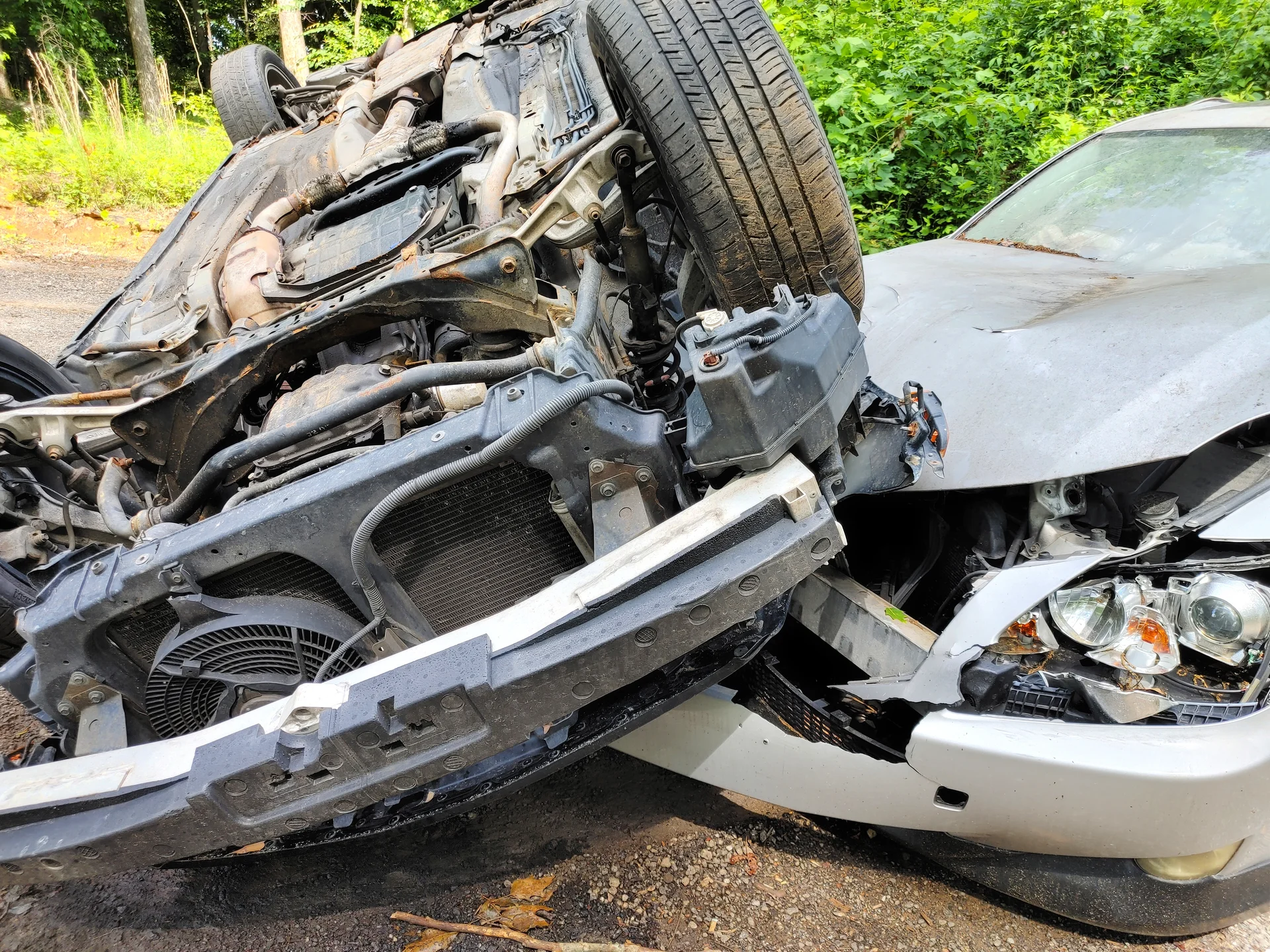
The phrase "wrongful death vs survival action" in New York refers to a legal distinction that often determines how a fatal injury case is structured and filed, who benefits from each claim, and what damages may be recoverable. In practice, both claims are often filed in the same lawsuit after a fatal motor vehicle collision, construction accident, medical malpractice case, or other event causing death. Even so, New York courts treat them as separate legal claims with distinct purposes and damages.
The wrongful death claim focuses on the losses suffered by the decedent's statutory distributees — the family members ("heirs") that are entitled to share in the estate, typically a spouse, children, or parents. The survival action preserves the dead person's own claim for the damages + pain + suffering period between injury and death. That distinction affects pleading, evidence, damages, settlement allocation, and estate procedure. A careful Estates, Powers, & Trust Law (EPTL) § 5-4.1 explanation is therefore only part of the analysis; the estate's separate survival claim also must be understood.
Short Answer
A wrongful death claim compensates the decedent's eligible surviving family members — called statutory distributees — for the financial losses caused by the death. A survival action, by contrast, belongs to the estate and steps into the decedent's shoes to seek the damages the decedent could have recovered had the decedent lived, including damages arising between injury and death.
Compensates eligible surviving family members for financial losses caused by the death
Preserves the decedent's own personal injury claim
Both claims are generally filed by the executor or administrator
Settlement or verdict often allocates each claim separately
On This Page
Wrongful Death Claims in New York Under EPTL § 5-4.1
In New York, wrongful death claims are statutory — meaning they exist only because a specific law creates them, not under general common law. The governing provision is EPTL § 5-4.1, which authorizes an action when a death is caused by a wrongful act, neglect, or default that would have allowed the injured person to file a lawsuit if death had not followed.
Time limit: EPTL § 5-4.1 requires that a wrongful death action be commenced within two years from the date of death. Missing this deadline will generally bar the claim entirely, regardless of how strong the case may be on the merits. Families should consult with an attorney as early as possible after a fatal event.
The important point is that a wrongful death claim is not simply a continuation of the dead person's own personal injury case. It is a separate statutory claim brought for the benefit of the decedent's statutory heirs — the surviving family members recognized by New York law (typically a spouse, children, or parents). The claim focuses on the financial losses those family members sustained because of the death, not on the dead person's own pain, fear, or medical treatment.
Core wrongful death point
A wrongful death claim exists to compensate eligible survivors for the financial losses resulting from the death. It does not duplicate the dead person's own personal injury claim.
- The claim is brought on behalf of statutory distributees rather than the dead person personally.
- Its purpose is to address the financial loss the family suffered because of the death, such as lost income, support, or household services.
- It is legally distinct from the claim the dead person could have brought if they had survived.
- New York wrongful death law generally does not allow recovery for emotional grief in the ordinary case.
Survival Claims Under New York Law
A survival action is not the same thing as a wrongful death claim. Under EPTL § 11-3.2, certain personal injury claims survive the decedent's death and do not simply disappear. In this context, the estate "steps into the shoes" of the deceased person and pursues the same personal injury claim the decedent could have brought had the decedent lived.
The survival claim therefore focuses on the period between the injury and the death. Think of it this way: what would the injured person have been able to sue for if they had survived? That is the survival claim. If the evidence shows the decedent remained alive — even briefly — after the injury, the estate may seek damages connected to that interval, including conscious pain and suffering, medical expenses, and other losses the decedent personally incurred.
Core survival point
A survival action belongs to the estate. Think of it as the deceased person's own personal injury lawsuit, carried forward by the estate after death. It asks: what could the decedent have recovered had they survived and sued? That is the measure of the survival claim.
- The action is brought on behalf of the decedent's estate.
- It seeks damages the decedent could have recovered had the decedent lived.
- It covers the interval between injury and death.
- In practice, survival claims are typically asserted by the estate's personal representative.
Who Files These Claims and Why Estate Appointment Matters
One of the most common misunderstandings is who may actually start the lawsuit. Under New York practice, wrongful death and survival claims are generally brought by the personal representative of the estate — the person formally authorized by a court to handle the deceased's affairs. That is either the executor named in a will, or an administrator appointed by the court when there is no will (called an intestate estate). Individual relatives generally cannot file these claims directly in their own names, even if they are the closest surviving family members.
That representative must ordinarily be appointed through the Surrogate's Court — the specialized New York court that handles wills, estates, and inheritance matters — and issued the appropriate official authority. When there is a will, that document is called Letters Testamentary. When there is no will, the court issues Letters of Administration. Both serve the same practical purpose: they give the representative the legal authority to act on behalf of the estate, including filing a lawsuit. Until that appointment occurs, the estate may not have the legal capacity to commence the action. This step can affect litigation timing even where the facts of the accident are already known.
Executor or Administrator
The representative must be formally authorized to act for the estate before commencing suit.
Representative Role
The representative brings both wrongful death and survival claims, even though the claims benefit different legal interests.
Timing Consequence
If appointment in Surrogate's Court is delayed, filing and settlement authority may also be delayed.
Practical filing point
Families often assume the nearest relative can immediately sue after a fatal event. In New York, the litigation generally proceeds through the estate representative, not directly through individual family members.
Wrongful Death vs Survival Action in New York
The clearest way to understand the distinction is to compare the two claims by purpose, ownership, and damages. Although they are often filed together in the same lawsuit, they remain legally separate claims evaluated independently.
| Category | Wrongful Death Claim | Survival Action |
|---|---|---|
| Primary statute | EPTL § 5-4.1 | EPTL § 11-3.2 |
| Whose claim is it? | A statutory claim for the benefit of the decedent's distributees | The decedent's own personal injury claim preserved for the estate |
| Who files it? | The personal representative of the estate | The personal representative of the estate |
| What loss is being addressed? | Financial loss suffered by eligible surviving family members as a result of the death | Injury-related loss suffered by the decedent before death |
| Typical damages focus | Lost support, lost services, funeral expenses, and in proper cases loss of parental guidance | Conscious pain and suffering, medical expenses, lost earnings before death, and similar personal injury damages |
| Can grief be recovered? | No ordinary recovery for emotional grief under current New York law | No; the focus is on the decedent's own compensable injury damages |
| Where do proceeds go? | Generally to distributees according to wrongful death allocation principles | Into the estate, subject to estate administration and distribution rules |
Damages in Wrongful Death vs Survival Claims in New York
Much of the real significance of this distinction appears in the damages analysis. Lawyers, insurers, and courts do not treat the two categories as interchangeable because they compensate different losses and may be distributed differently after settlement or judgment.
Wrongful Death Damages
Wrongful death damages are tied to the financial losses suffered by eligible surviving family members (distributees). Depending on the facts, that can include loss of financial support — the income or contributions the deceased would have provided — loss of household services, loss of parental guidance, and funeral or burial expenses. The claim is designed to measure the economic impact of the death on the family members recognized by statute.
Loss of parental guidance is a category that families often underestimate. New York courts recognize that minor children lose more than financial support when a parent dies — they lose the guidance, supervision, and instruction a parent would have provided through adulthood. Evidence supporting this category includes testimony about the parent-child relationship, the parent's involvement in the child's life, and expert analysis of projected future contributions.
A recurring point in any careful EPTL § 5-4.1 explanation is that New York does not generally allow damages for emotional grief, sorrow, or loss of companionship in the way some other states do. Many families find this surprising — their loved one is gone, and yet New York law does not directly compensate surviving family members for the grief they feel. That limitation is one reason lawyers must keep the wrongful death claim analytically separate from the estate's survival claim.
Survival Action Damages
The survival action asks what the decedent personally endured or incurred after the injury but before death. In many cases, the most significant category is conscious pain and suffering. Under New York law, "conscious" is a legal standard — it means the decedent must have had some level of awareness of the pain or suffering after the injury. If the person was rendered immediately and permanently unconscious, the survival damages for pain and suffering may be limited or disputed. The strength of this category therefore often depends on medical records, witness observations, and expert testimony about the decedent's condition before death. Medical expenses incurred before death may also be part of the claim, and other personal injury damages can be included if they are legally and factually supported.
The phrase damages in wrongful death vs survival claims therefore reflects two different valuation exercises. One looks outward to surviving beneficiaries' economic loss. The other looks inward to the decedent's own claim during the period the decedent remained alive.
Damages distinction in one sentence
Wrongful death damages compensate surviving family members for their financial loss; survival damages compensate the estate for the decedent's own pain, expenses, and injury-related losses before death.
How Wrongful Death and Survival Claims Work in Litigation
In practice, wrongful death and survival actions are often included in the same complaint arising from the same fatal incident. The fact that they are filed together does not merge them into one claim. Courts still analyze them separately, and the evidence needed for one category may differ from the evidence needed for the other.
- A single lawsuit may include both claims arising from the same fatal event.
- The personal representative generally appears as plaintiff in a representative capacity for both claims.
- Settlement negotiations often discuss separate values for the wrongful death component and the survival component.
- A verdict sheet or settlement papers may allocate damages between the two claims rather than treating them as one fund.
- Because the claims may be distributed differently after recovery, allocation can matter beyond the liability phase.
Procedural requirements also affect timing. Before the estate representative is appointed, the case may not be ready to be filed in the usual manner. Later in the case, a settlement or judgment may require careful allocation because wrongful death proceeds and survival proceeds do not necessarily follow the same path once recovered.
That allocation has real practical consequences. Wrongful death proceeds are distributed directly to the eligible surviving family members, generally bypassing the estate and its creditors. Survival proceeds, on the other hand, become part of the estate and pass through estate administration — meaning they may be subject to estate debts, taxes, or distribution rules different from those that govern wrongful death proceeds. For that reason, even a single settlement check in one case may be broken down into separate amounts attributed to each claim.
Examples Showing the Difference Between Wrongful Death and Survival Claims
These illustrations are simplified, but they show how the distinction works in actual case analysis.
Example 1: Injury Followed by Death Days Later
A pedestrian is struck by a vehicle, remains hospitalized for several days, undergoes treatment, and then dies. In that situation, the estate may assert a survival claim for conscious pain and suffering and medical expenses during the hospitalization period, while also asserting a wrongful death claim for the distributees' pecuniary losses.
Example 2: Death Is Immediate
A worker is killed instantly in a catastrophic event. A wrongful death claim may still exist if the statutory elements are satisfied, but the survival action may be more limited because there may be little or no evidence of conscious pain and suffering or other pre-death damages.
Example 3: Separate Damage Allocation
In a litigated fatal crash case, the parties may discuss one amount attributable to the heirs' economic loss and a different amount attributable to the decedent's pre-death personal injury claim. Even though the matter resolves in one action, the legal analysis still treats the claims separately.