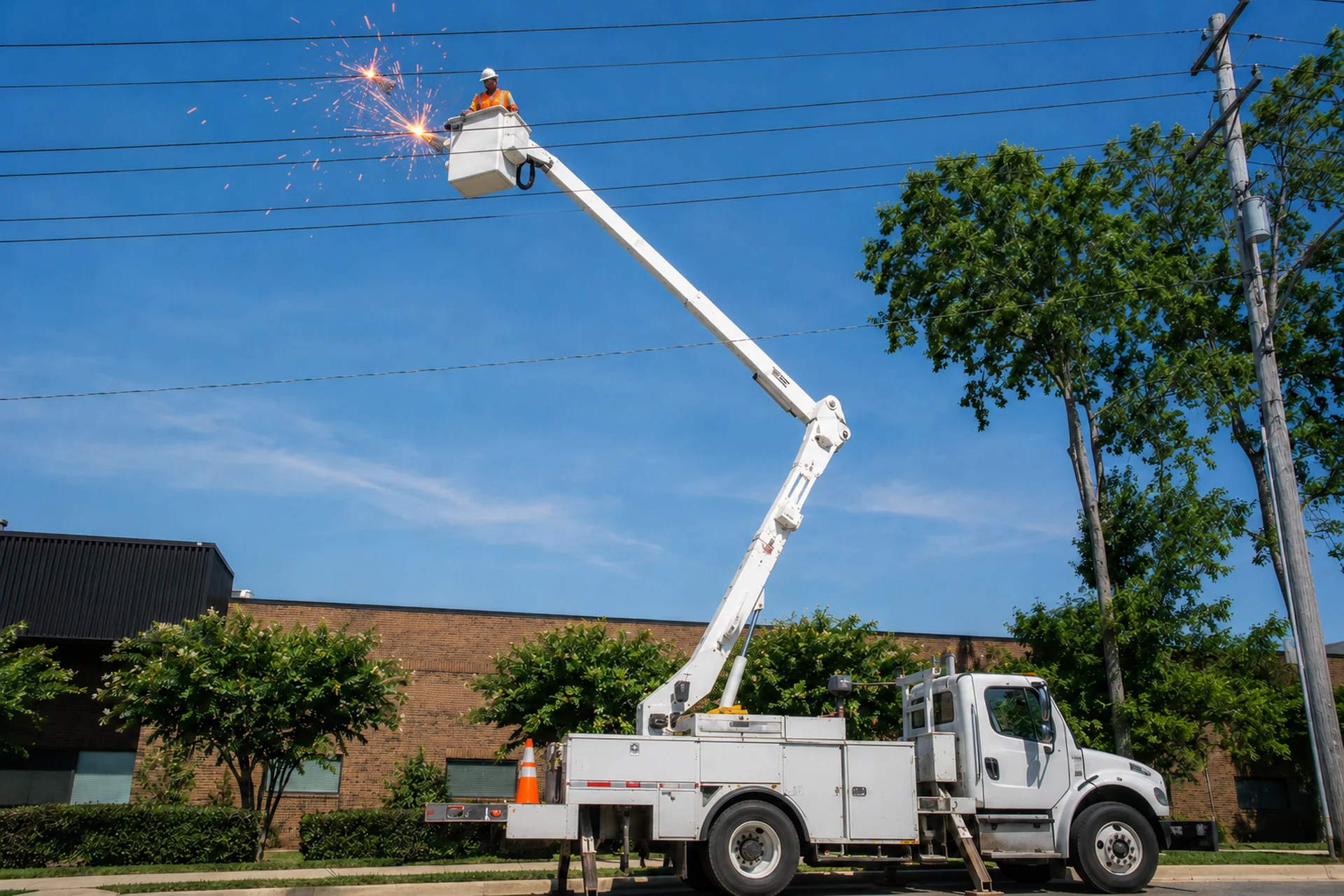
Suing for Overhead Power Line Injuries in New York
Overhead power lines are among the most lethal hazards at a construction site. Unlike exposed wiring inside a building, high-voltage transmission lines typically carry tens of thousands of volts and are rarely insulated.
New York Labor Law ("LAB") § 202-H, known as the "High-Voltage Proximity Act," prohibits employers and contractors from allowing workers, tools, or machinery to operate dangerously close to overhead electrical lines carrying more than 600 volts. The statute imposes a strict, non-delegable obligation on every contractor and site owner, meaning the party in control of the work cannot shift responsibility to someone else.
In This Article
Safety Rules Contractors Must Follow Before Work Near Power Lines
Contractors must satisfy four specific requirements before any work may begin near overhead lines covered by the statute. Each is mandatory, and the failure to comply with any one of them can form the basis of a civil negligence claim.
1. Five-Day Utility Notice Before Dangerous Line Work
The contractor must provide written notice to the operating utility company at least five working days before work begins near the power lines. This notice triggers the utility's obligation to take protective action on the lines and creates a documented record that the required outreach was made. A contractor who skips this step and begins work near live lines has violated the statute before the first piece of equipment reaches the site.
2. De-Energizing, Grounding, or Insulating Live Wires
Work cannot legally begin until the utility company has de-energized, grounded, or physically insulated the live wires. These are the only three possible methods the statute recognizes as sufficient to protect workers from the hazard. The utility must complete at least one of these measures before the contractor can allow workers or machinery to operate in proximity to the line.
3. Contractor Payment for Power Line Protection
The contractor or site manager is financially responsible for whatever safeguards the utility implements. The statute does not permit a contractor to use cost as a reason to defer or skip the required protections. If de-energizing, grounding, or insulating the lines requires payment to the utility company, that expense falls on the party controlling the work.
4. Warning Signs for Crane and Boom Truck Operators
Heavy equipment capable of moving vertically or horizontally, such as cranes or boom trucks, must display clear, highly visible warning signs both inside the operator's cabin and on the exterior of the machine. These signs alert operators to the presence of overhead lines before they position or extend equipment. Their absence on a machine involved in an electrocution is itself evidence that the contractor failed to implement the safeguards the statute demands.
Construction Equipment Accidents That Lead to Electrocution Claims
Most LAB § 202-H electrocutions share a common thread: a contractor failed to take the required protective steps before work began, and live lines remained within reach of heavy equipment. The equipment involved changes, but the underlying failure is consistent.
Crane Electrocution Lawsuits After Boom Contact with Power Lines
Crane boom arms are among the most frequently involved pieces of equipment in LAB § 202-H electrocutions. As a crane lifts materials or repositions during a job, the boom can swing into or contact overhead lines that cross or run adjacent to the work zone. The current travels down the boom, through the cable, and into the crane body. Workers on the ground or on scaffolding who are in contact with any part of the crane, the load, or a grounded object nearby can receive a lethal shock.
Excavator and Backhoe Accidents Near Live Overhead Wires
Excavators and backhoes operate at the perimeter of job sites where overhead lines frequently cross access roads and staging areas. When these machines work without spotters or without maintaining proper clearance from live wires overhead, the bucket or arm can contact the line. The operator, who may be in a grounded cab, sometimes survives, while workers on the ground near the machine face far greater exposure.
Scaffold and Ladder Electrocutions on New York Job Sites
Metal scaffolding erected near a building facade or repositioned during a project can close the gap between the structure and an adjacent overhead line without warning. Aluminum ladders carried horizontally or raised without clearing overhead obstructions are similarly dangerous. Workers carrying or climbing these structures complete the circuit between the line and the ground, often with no opportunity to disengage before the shock is delivered.
Dump Truck Electrocutions During Unloading
Dump trucks unloading materials on job sites near overhead lines are a recurring source of electrocutions. As the bed rises to deposit a load, the truck's overall height increases by several feet, and if the vehicle is positioned beneath or near a live wire, the raised bed can contact it. Drivers who step out of the cab and touch the truck or the ground in the wrong location complete the circuit. Ground workers assisting with the unload are at significant risk as well.
How a Labor Law § 202-H Violation Strengthens an Injury Lawsuit
Labor Law § 202-H is an administrative safety statute. A violation of its requirements does not automatically produce a judgment, but it is powerful evidence that the contractor or site owner failed to meet the legal standard of care. In practice, LAB § 202-H is rarely litigated in isolation. It is paired with two other New York Labor Laws that together provide a broader framework for establishing liability and recovering damages.
Labor Law § 200 Claims After Unsafe Power Line Work
Labor Law § 200 codifies the common-law duty of property owners and general contractors to maintain a reasonably safe worksite. A contractor whose failure to comply with LAB § 202-H results in workers being exposed to live overhead lines has simultaneously failed to furnish a safe working environment under LAB § 200. Because LAB § 200 is a general negligence statute, the documented LAB § 202-H breach gives an injured worker direct, specific evidence of what the contractor failed to do, without relying on general or conclusory allegations.
Labor Law § 241(6) Electrocution Claims Against Owners and Contractors
Labor Law § 241(6) imposes a non-delegable duty on owners and contractors to comply with the specific safety rules set out in the Industrial Code of the State of New York. The Industrial Code contains provisions governing crane safety near energized lines and minimum clearance distances for electrical hazards that closely mirror the requirements of LAB § 202-H. When a high-voltage electrocution arises from conduct that violates both LAB § 202-H and the corresponding Industrial Code rules, both violations can be pleaded together to establish third-party liability against property owners and contractors who were not directly operating the equipment. This is particularly significant for workers whose employer, a subcontractor, may carry limited insurance relative to the severity of the injuries.
Compensation for New York Electrical Injury Victims
High-voltage electrical injuries are among the most destructive injuries a worker can sustain. A shock that passes through the body causes severe internal burns, can destroy nerve tissue, trigger cardiac arrest, and result in amputations of limbs where the current entered or exited. The physical damage is frequently compounded by post-traumatic stress, depression, and the psychological burden of a sudden, catastrophic disability.
Workers' Compensation covers a portion of medical expenses and replaces a fraction of lost wages during recovery, but it does not compensate for pain and suffering, it caps wage replacement well below full income, and it does not address the long-term cost of permanent disability. A personal injury lawsuit against the contractor or site owner who violated § 202-H provides a path to full recovery.
Pain and Suffering After a High-Voltage Shock
Compensation for the physical pain of the initial shock and the recovery period, including surgeries, skin grafts, and rehabilitative procedures, as well as for the emotional consequences of a life-altering injury.
Medical Care, Burn Treatment, and Rehabilitation Costs
Past medical expenses from emergency treatment and hospitalization, present costs of ongoing care, and the projected future cost of long-term rehabilitation, assistive devices, and any additional procedures the injuries require.
Lost Wages and Loss of Future Earning Capacity
Wages lost from the date of injury through the litigation, and the projected loss of earning capacity if the injuries prevent the worker from returning to construction work or limit the type and duration of employment the worker can sustain going forward.
Wrongful Death Damages After Fatal Electrocution
When a high-voltage electrocution is fatal, the worker's immediate family members may bring a wrongful death claim. Recoverable damages include the financial support the deceased would have provided over a lifetime, funeral and burial expenses, and in some circumstances, compensation for the pain and suffering the deceased experienced between the accident and the time of death.
Overhead Power Line Injury Lawyer in New York
Construction workers injured near overhead power lines in New York, and their families, can contact Sternberg Injury Law Firm for a free case evaluation. When a high-voltage accident occurs on a job site, construction companies and their insurance adjusters move quickly to develop a narrative that blames the equipment operator or the worker. The time to preserve critical evidence from the accident scene is limited and acting promptly protects the right to recover damages. You can contact the Sternberg Injury Law Firm via phone, text message, email, WhatsApp, or online form. There is no fee unless we win.
High-Voltage Construction Accident FAQ for Injured Workers
A personal injury lawsuit arising from a construction electrocution in New York must generally commence within three years of the date of the accident. Wrongful death claims must be filed within two years of the date of death. If the claim involves a municipal entity such as a city-owned utility, a Notice of Claim must also be filed within 90 days of the injury before the lawsuit can proceed. Because investigations into LAB § 202-H violations often require early preservation of site evidence and equipment records, contacting an attorney as soon as possible after the accident is critical.
Yes, but not in the way most workers expect. Collecting Workers' Compensation does not bar a personal injury lawsuit against a third party such as a general contractor or site owner. However, the Workers' Compensation carrier typically has a lien on the personal injury recovery, meaning a portion of any settlement or verdict may be used to reimburse the carrier for benefits already paid. The recoverable damages in the personal injury lawsuit, which include pain and suffering and full lost earning capacity, are generally far larger than the Workers' Compensation benefits received, and experienced counsel can often negotiate a reduction of the lien amount to maximize the worker's net recovery.
Labor Law § 202-H applies specifically to overhead electrical lines. Work performed near buried or underground cables is governed by a separate regulatory framework. Workers injured by contact with underground lines may still have valid claims, but those claims are evaluated under different statutes and Industrial Code provisions than those that apply to overhead high-voltage line accidents.