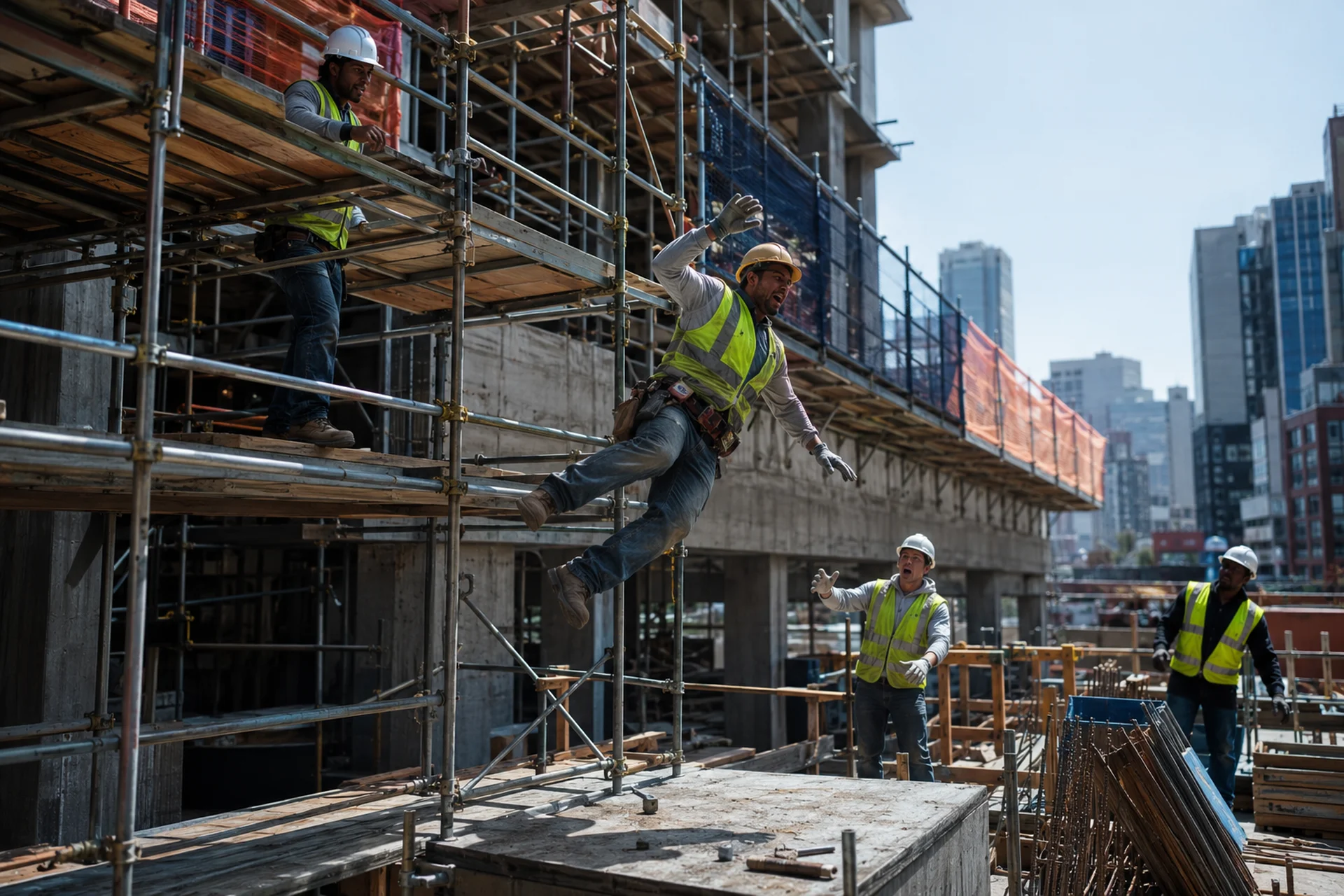
Construction work carries serious risks, and New York law places specific responsibilities on property owners and general contractors—not just the direct employer—when unsafe site conditions injure a worker. Labor Law § 241(6) is one of the most important tools available to injured construction workers, because it can reach beyond the worker's direct employer and create liability for owners and general contractors when site-safety violations contribute to an injury.
In This Article
What Is New York Labor Law § 241(6)?
New York Labor Law § 241(6) is a state statute that requires property owners and general contractors to provide "reasonable and adequate protection and safety" for workers at construction, excavation, and demolition sites. Unlike a general negligence standard, this law imposes a statutory safety duty directly tied to the New York Industrial Code Part 23.
One of the most significant aspects of § 241(6) is that it can create liability for owners and general contractors even when a subcontractor was responsible for creating the unsafe condition. The obligation flows from the statute itself, not merely from who was at fault on a given day.
A claim under § 241(6) requires pointing to a specific Industrial Code Part 23 provision that was violated, not just a general claim that the site was unsafe. The particular code section matters significantly to how the case develops.
What Construction Work Is Covered Under Labor Law § 241(6)?
Labor Law § 241(6) is designed to cover a broad range of construction-related activities, including:
- Construction, alteration, and repair of buildings and structures
- Demolition and excavation work
- Commercial and residential projects that involve structural work, including certain maintenance-type jobs where structural or height-related risks are present
Whether a specific project falls under Industrial Code Part 23 depends on the nature of the work, not merely its label. The worker must also be engaged in a covered trade — purely clerical or office-based tasks generally fall outside the statute's protection.
How Does a New York Labor Law § 241(6) Claim Work?
Beyond the threshold question of whether the work qualifies, courts evaluating a § 241(6) claim look at two additional elements:
- A specific Industrial Code violation: unlike Labor Law § 200, a § 241(6) claim requires pointing to a particular provision of Industrial Code Part 23 that was violated — rules governing scaffolding, guardrails, floor openings, excavation walls, and similar hazards.
- A causal connection: there must be a link between the code violation and the harm suffered.
The statute operates in a manner similar to strict liability: when a specific code provision is violated and that violation contributes to an injury, liability may attach even if the injured worker also played some role in the circumstances. However, each case is highly fact-specific, and outcomes depend entirely on the evidence, circumstances, and applicable law. No result can be predicted or guaranteed in advance.
Identifying the right Industrial Code provision is a critical early step in any § 241(6) matter. Different provisions cover different types of hazards, and which sections apply depends on the specific conditions present at the worksite.
Labor Law § 241(6) vs. Sections 200 and 240(1)
New York's Labor Law includes several related provisions that often come up in construction accident cases. Understanding the differences can help clarify which theories may be relevant to a given situation.
| Section | Nickname | What It Covers | Standard |
|---|---|---|---|
| § 240(1) | Scaffold Law | Gravity-related injuries: falls from heights (roofs, scaffolds, ladders) or injuries from falling objects. Applies to construction, repair, and demolition. | Strict liability on owners and general contractors |
| § 241(6) | Not commonly used | Broader site-safety duties across a wide range of hazards defined in Industrial Code Part 23, including guardrails, floor openings, scaffolding conditions, excavation walls, and more. Not limited to gravity-related accidents. | Requires a specific Industrial Code violation; similar to strict liability when a violation is established |
| § 200(1) | Not commonly used | Codifies the common-law duty to maintain a reasonably safe workplace. Not tied to a specific Industrial Code provision. Typically requires showing that the owner or contractor had notice of and control over the dangerous condition. | General negligence / notice and control |
The same construction accident may potentially give rise to claims under more than one section. Which theories apply depends entirely on the facts and evidence specific to each case.
Deadlines, Notice Rules, and Workers' Compensation
Statute of Limitations and Notice Deadlines
Labor Law § 241(6) claims are subject to statutes of limitations, and the applicable deadline can vary depending on the circumstances, including whether the defendant is a private party or a public entity such as a municipality or government agency. Because these deadlines can differ significantly and missing them can affect your ability to pursue a claim, it is prudent to consult with a personal injury attorney as soon as possible after an injury.
Workers' Compensation and Third-Party Claims
Workers' Compensation provides no-fault benefits to injured workers regardless of whether a § 241(6) violation occurred. However, a Labor Law claim may allow recovery from additional parties beyond the employer, such as the property owner or general contractor, which Workers' Compensation alone does not cover. The interaction between Workers' Comp and Labor Law claims can be complex, and the specifics depend on the facts of each situation.
Anyone who believes they may have a claim should act promptly and speak with a New York personal injury attorney to understand their rights, applicable deadlines, and available options.
What to Do After a New York Construction Accident
At the Scene
-
1
Report the injury to a supervisor or site manager as soon as it is safe to do so.
-
2
Request an incident report: ask that a written report be prepared documenting what happened.
-
3
Document the conditions: if possible, take photographs of the area, any defective equipment, unguarded openings, scaffolding, ladders, or other relevant hazards.
Medical Care and Record Preservation
-
4
Seek appropriate medical care promptly and follow all recommended treatment.
-
5
Keep all records: medical records, bills, and any written communications related to your injury or the accident.
-
6
Preserve communications: save any emails, text messages, or written notes that relate to the incident, your work assignment, or the site conditions.
Speak With a Construction Accident Attorney
The personal injury attorneys at Sternberg Injury Law Firm can represent workers across New York that have been hurt on construction sites due to Labor Law violations. If you were injured in a fall, struck by equipment, or harmed by an unsafe worksite condition, you may be entitled to recover compensation for medical expenses, lost income, and pain and suffering. An attorney can evaluate whether § 241(6), § 240(1), § 200, or another theory applies to your situation and handle the legal process while you focus on your recovery.
Our attorneys have recovered millions of dollars for injury victims across New York and bring over 40 years of combined legal experience to these cases. We offer free consultations and can arrange to meet at your home, hospital, or another convenient location if travel is not possible. Our team is also able to assist clients in multiple languages, including Creole, English, Hebrew, Hindi, Russian, Spanish, Urdu, Uzbek, and Yiddish.
GET A FREE CONSULTATION TODAYLabor Law § 241(6) Frequently Asked Questions
Labor Law § 241(6) protects construction workers from unsafe conditions caused by violations of specific provisions of New York Industrial Code Part 23. This includes hazards such as unguarded floor openings, defective scaffolding, improper excavation conditions, missing guardrails, and other site-safety failures defined in the Industrial Code.
Whether § 241(6) applies to an independent contractor depends on the nature of the work being performed and the specific facts of the relationship between the parties. Some independent tradespeople performing covered construction work may qualify for protection under the statute; others may not.
Many residential construction projects do fall under Industrial Code Part 23, and therefore under § 241(6), when the work involves structural activity at height, excavation, demolition, or similar risks. However, there are certain limited exceptions for one- and two-family homeowners who do not direct or control the work. Whether a specific residential project qualifies depends on the circumstances.
When an employer also acts as the property owner or general contractor, the situation can raise complex questions about the interaction between Workers' Compensation and Labor Law claims. Workers' Compensation rules still apply, and Labor Law claims are evaluated on their own statutory basis. However, the specific facts and relationships involved will determine what legal options may be available.
The answer depends on several factors, including who the defendants are and the specific circumstances of the accident. Deadlines for claims against government or municipal entities, for example, can be significantly shorter than those for private-party defendants. Because statutes of limitations vary and missing a deadline can be irreversible, it is important to consult a licensed New York personal injury attorney as soon as possible rather than waiting to see how your situation develops.