New York's Anti-Subrogation Law:
What GOL § 5-335 Means for Your Settlement
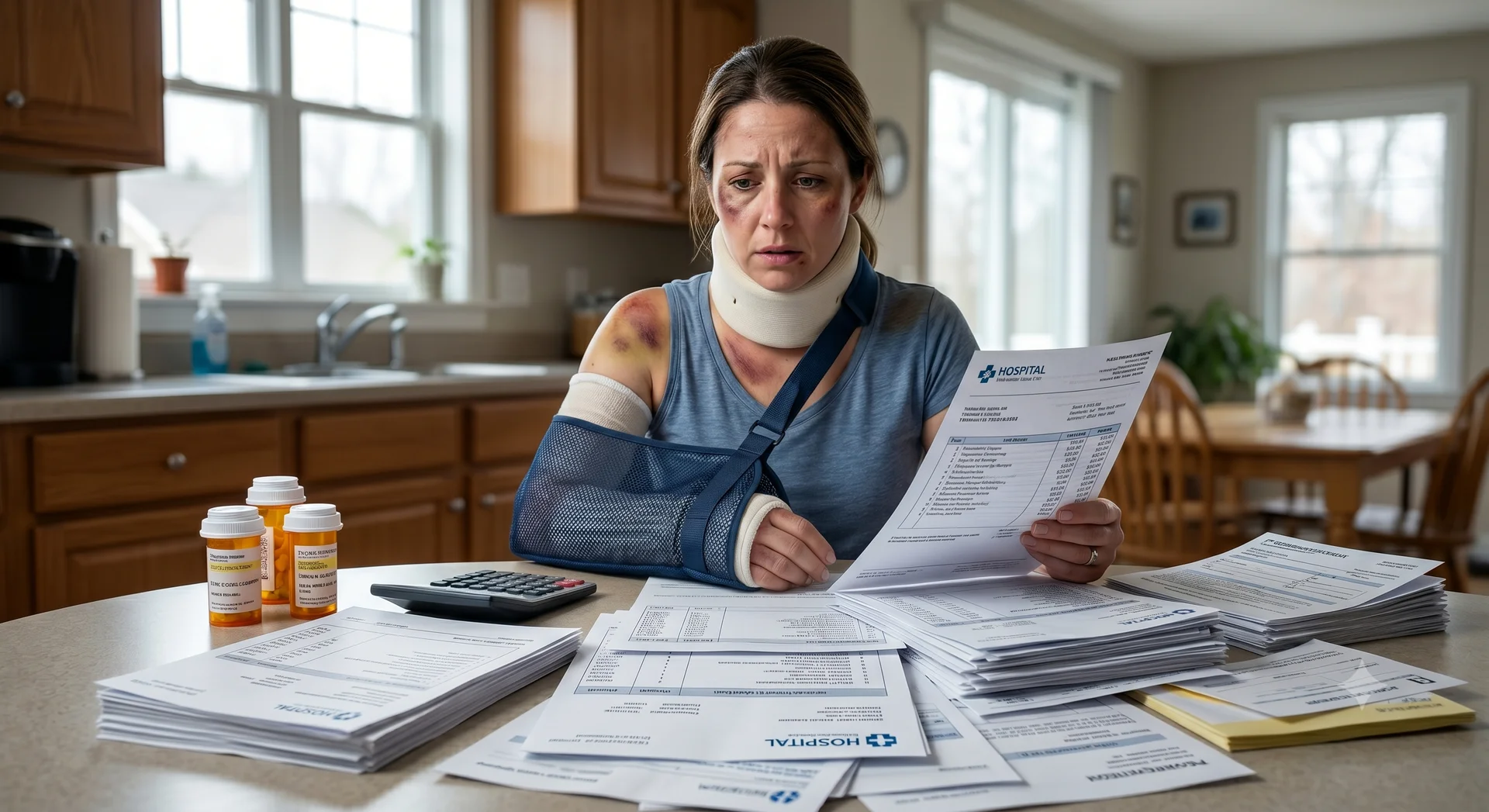
New York General Obligations Law (GOL) Section 5-335, commonly referred to as the anti-subrogation statute, establishes that private health insurers generally cannot recover medical expenses directly from personal injury settlements. The law’s core purpose is to preserve the injured party’s net recovery by preventing insurers from asserting reimbursement claims against funds the injured person receives. Under New York law, settlements are presumed to compensate the injured party for all damages, including medical expenses, and GOL Section 5-335 protects those funds from most health insurance subrogation claims.
This protection is particularly significant in personal injury cases where settlements represent compensation for pain, suffering, lost wages, and medical care. Without this statute, private insurers could potentially reduce the recovery that a plaintiff is entitled to receive, even when the settlement fully addresses the injury’s impact.
In This Article
Understanding Subrogation and Insurance Reimbursement
Subrogation is the legal mechanism through which an insurer seeks to recover funds it paid on behalf of a policyholder. In a personal injury settlement, an insurer may attempt to recoup medical costs that it covered, asserting that the injured person’s settlement proceeds should first satisfy these obligations.
It is important to distinguish subrogation from statutory liens. Health insurance reimbursement claims by private carriers are generally barred under GOL Section 5-335, while statutory liens, such as those arising from Workers’ Compensation, Medicare, or Medicaid, follow separate rules and may require repayment. Understanding this distinction ensures accurate settlement calculations and prevents improperly applied deductions.
How New York Law Protects Your Personal Injury Settlement from Health Insurers
In practice, GOL Section 5-335 bars most private health insurers from seeking repayment directly from settlement proceeds. Courts have consistently enforced this limitation. For instance, in Wurtz v. Rawlings Co., LLC, the court confirmed that standard health insurance carriers cannot assert subrogation claims under New York law when the settlement is intended to compensate the injured party fully.
Settlement agreements are typically structured to reflect this protection. Attorneys negotiate with insurers to clarify which funds are designated for medical care and which are for general damages, ensuring the settlement does not unintentionally trigger reimbursement demands. By adhering to these structures, plaintiffs retain the maximum lawful recovery while remaining compliant with New York law. New York courts may also apply the "made whole" doctrine as an additional safeguard — requiring that the injured party be fully compensated for all losses before any reimbursement claim can be satisfied. This provides a further layer of protection for plaintiffs whose total damages exceed their settlement amount. Note also that New York No-Fault (PIP) benefits, which apply in many auto accident cases, operate under a separate statutory framework and are not governed by GOL Section 5-335.
When ERISA Overrides New York's Anti-Subrogation Protections
A critical caveat to GOL Section 5-335 is the treatment of self-funded ERISA plans. Unlike fully insured health plans, these employer-sponsored plans are governed by federal law and may pursue reimbursement even where state anti-subrogation protections exist. Courts recognize that ERISA can preempt state statutes, meaning that recovery may still be allowed if the plan is self-funded and the expenses are covered pursuant to ERISA plan terms.
For example, in Arnone v. Aetna Life Insurance Co., the Second Circuit emphasized that the operative question is whether the employer's plan is self-funded rather than fully insured. Where the plan is self-funded, ERISA preempts GOL Section 5-335 and the plan's reimbursement claim may be enforceable regardless of state law. Plaintiffs and counsel must carefully review plan documents to determine whether federal law overrides state protections in each specific case.
What GOL § 5-335 Means for Your Net Recovery in a New York Injury Case
Understanding GOL Section 5-335 directly impacts settlement strategy and net recovery. From a practitioner’s perspective:
- Attorneys evaluate whether any reimbursement claim is legally valid or barred under state law — including identifying whether the insurer is a private carrier subject to GOL § 5-335 or a self-funded ERISA plan governed by federal law.
- Improper reimbursement demands from private health insurers are formally challenged before settlement funds are distributed, often citing GOL § 5-335 directly to compel withdrawal of the claim.
- Structuring settlements correctly — by clearly allocating funds between medical expenses, lost wages, and pain and suffering — ensures the injured party retains intended compensation for both economic and non-economic damages and reduces the risk of triggering unwarranted reimbursement claims.
The New York State Court of Appeals' Decision in Fasso v. Doerr confirms that GOL § 5-335 does not eliminate all reimbursement obligations — statutory liens and properly asserted ERISA plan claims remain enforceable. Legal counsel must assess each claim individually and verify the insurer type before advising clients on their net recovery. The outcome of ERISA reimbursement claims depends on specific plan document language and applicable federal equitable defenses, so no assumption of any offset should be made without a thorough review.
Practical Examples of Reimbursement and Non-Reimbursement
Private Health Insurer Barred
A plaintiff incurs $30,000 in medical expenses covered by a private insurance plan. After a personal injury settlement, the insurer attempts to recover these funds. Under GOL Section 5-335, the insurer’s claim is barred, and the plaintiff retains the full settlement without offset for medical costs, consistent with principles established in Wurtz v. Rawlings Co., LLC.
Self-Funded ERISA Plan Recovery
A construction worker covered by a self-funded ERISA plan receives a settlement following a workplace accident. The plan administrator seeks reimbursement for $20,000 of medical expenses. Because federal ERISA law can preempt GOL Section 5-335 protections, the claim may be enforceable — provided the it is supported by the insurance plan documents and no federal equitable defenses (such as the made-whole doctrine) apply. This illustrates the critical difference between medical insurance plan types and why a careful review of plan documents is essential before any offset is accepted.
Comparison
Two plaintiffs each receive $50,000 settlements. Plaintiff A’s medical expenses were covered by a private insurer, while Plaintiff B’s were covered by a self-funded ERISA plan. Plaintiff A keeps the full $50,000, whereas Plaintiff B may face a partial offset due to ERISA reimbursement obligations. This contrast highlights how the anti-subrogation law applies selectively depending on the insurer type.