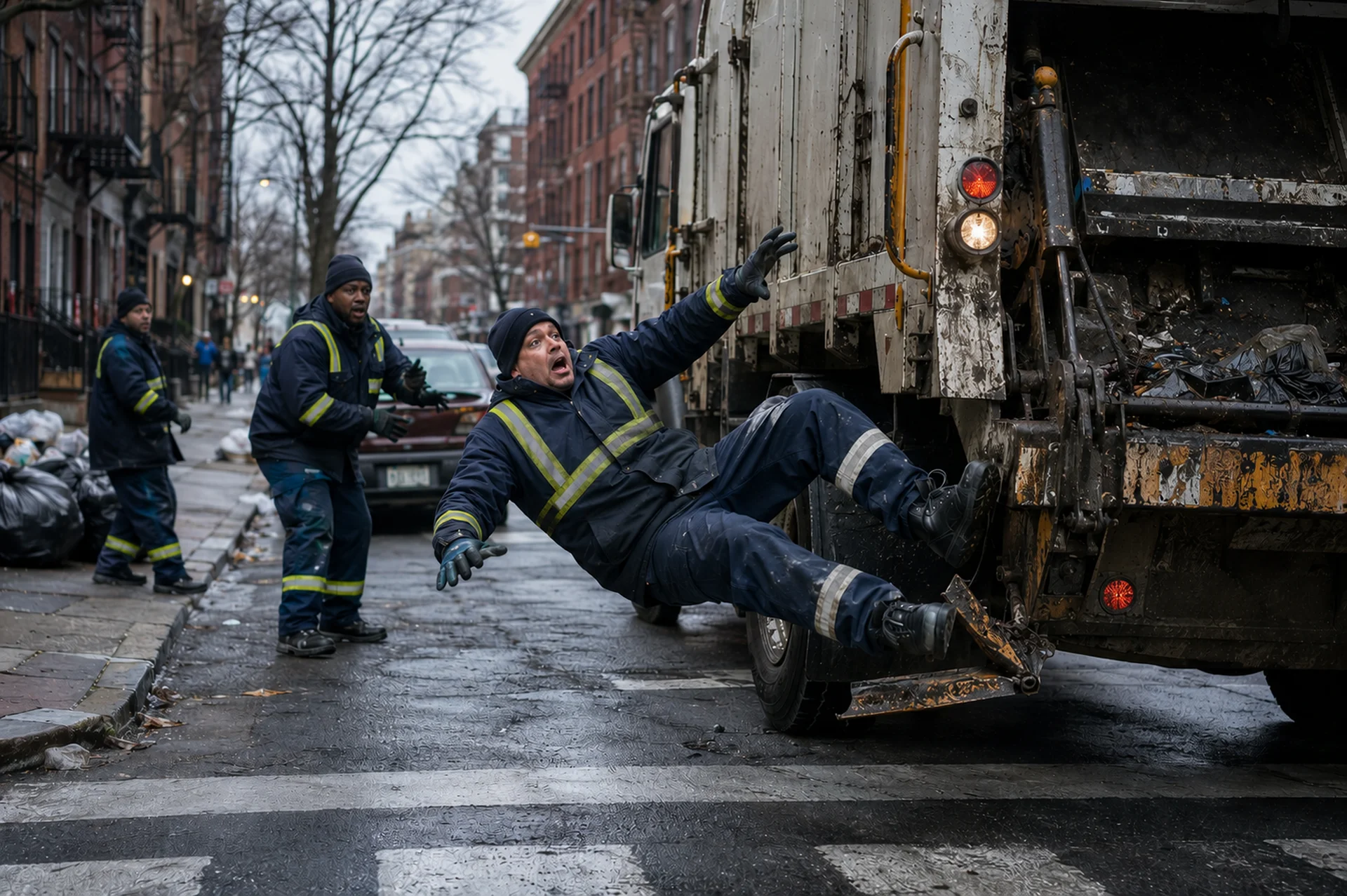
Public sector employees in New York are not covered by federal OSHA (“Occupational Safety and Health Administration”);'?'. Their workplace safety protections come instead from Article 27-A of the New York Labor Law, commonly known as the Public Employee Safety and Health Act, or PESH. Understanding how PESH operates, how it is enforced, and how it interacts with civil litigation is foundational to evaluating any municipal liability claim.
In This Article
What Is Article 27-A of the New York Labor Law?
When Congress passed the federal Occupational Safety and Health Act in 1970, it excluded state and local government employees from its reach. New York responded by enacting Article 27-A, giving the New York State Department of Labor authority to adopt and enforce workplace safety standards across all public sector employers. The goal was to ensure that employees of state agencies, counties, municipalities, public authorities, and other governmental entities are entitled to the same baseline protections that private sector workers receive under federal law. PESH accomplishes this by incorporating federal OSHA standards into New York state law and applying them to public employers as a matter of mandatory legal obligation.
Where federal OSHA standards have not been formally adopted, the New York State Department of Labor is authorized to develop its own. In practice, PESH standards are substantially equivalent to federal requirements, applied through a state enforcement structure.
Who Is Covered Under the PESH Act?
The PESH Act covers "public employees," a term defined broadly under Article 27-A to include any person employed by the state of New York or any of its government bodies. In practice, this encompasses an extensive range of workers, including municipal laborers, transit employees, sanitation workers, correction officers, public hospital staff, highway maintenance crews, parks department employees, public school workers, and employees of public authorities such as the Metropolitan Transportation Authority.
On the employer side, covered entities include state agencies, counties, cities, towns, villages, school districts, and any authority or public benefit corporation created under state law. The breadth of this coverage reflects the legislature's intent to extend protections across the full range of government employment, not merely in high-hazard settings.
For injury claim purposes, coverage determines which safety standards applied to the workplace at the time of the incident. Whether the injured worker's employer qualifies as a covered public sector entity is the first question in any PESH-related claim.
Key Safety Obligations Imposed on Public Employers
Under Article 27-A, public sector employers are required to provide employees a workplace free from recognized hazards that are causing or are likely to cause death or serious physical harm. This mirrors the language of federal OSHA's general duty requirement and places an active, ongoing responsibility on government employers to find and fix dangerous conditions before anyone gets hurt.
Beyond that general duty, public sector employers must comply with specific safety and health standards issued under PESH. These standards govern everything from fall protection on elevated work surfaces and proper use of personal protective equipment, to hazard communication, lockout/tagout procedures for equipment maintenance, and bloodborne pathogen exposure protocols. The New York State Department of Labor has adopted hundreds of specific standards through the regulatory process, and public employers are responsible for maintaining full compliance.
Public sector employers are also obligated to maintain accurate records of work-related injuries and illnesses, provide required safety training to employees, and implement internal compliance programs. Employers that fail to comply are subject to citations, financial penalties, and orders requiring the hazards to be corrected within set deadlines.
How PESH Violations Impact Personal Injury Cases
One of the most important things to understand about PESH is that it does not give injured workers the right to sue directly based on a violation. Only the New York State Department of Labor can take enforcement action under Article 27-A. An injured worker cannot point to a PESH citation alone and use it as the standalone basis for a lawsuit.
That does not mean PESH violations are irrelevant to a lawsuit. A documented PESH violation can be powerful evidence in a negligence claim, helping to show that the employer knew or should have known about the dangerous condition, that the condition was a recognized hazard, and that the employer failed to take reasonable steps to fix it. Courts have recognized that regulatory violations, while not a lawsuit on their own, are relevant to whether the employer met its duty of care.
In cases where an injured public employee brings claims under the New York Labor Law or General Municipal Law, PESH evidence fits naturally into the litigation framework. Labor Law claims, including those brought under sections 200, 240(1), and 241(6), frequently involve overlapping safety obligations. A prior PESH inspection that identified the same problem that caused the injury is strong evidence that the employer knew about it and had time to fix it. Under General Municipal Law, where proving the employer's awareness of a dangerous condition is often critical, PESH records provide an official, documented picture of the workplace that carries real weight.
Municipal Liability and Public Employee Injury Claims
Bringing a personal injury claim against a municipal or government employer in New York involves procedural requirements that differ significantly from claims against private parties. These requirements must be satisfied before any lawsuit can proceed, and failure to comply generally results in dismissal.
Notice of Claim. Under General Municipal Law Section 50-e, an injured person must file a Notice of Claim within 90 days of the injury. The notice must identify the claimant, describe the nature of the claim, specify the time and place of the incident, and set forth the injuries and damages alleged. Courts strictly enforce this requirement, and late notices can be fatal to an otherwise valid claim, though applications for leave to file a late notice may be available in limited circumstances.
Shortened Filing Deadline. Claims against municipal employers typically must be filed within one year and ninety days of the injury, compared to the standard three years that applies to claims against private parties. This shorter window makes it important for injured public employees to speak with an attorney as soon as possible.
Government Immunity and Its Limits. Government entities in New York have certain legal protections against being sued, but those protections are not absolute. When a municipality is acting more like a private business than a government agency, it can be held to the same standard of care as any other party.
Key Court Decisions Interpreting Article 27-A
Several significant decisions have shaped how New York courts and administrative bodies interpret Article 27-A's reach, the limits of enforcement authority, and the obligations it imposes on public sector employers in varied institutional contexts.
Matter of City of New York v. Commissioner of Labor (2011)
This decision addressed the scope of enforcement authority held by the New York State Department of Labor under PESH. At issue was whether the Department could exercise jurisdiction over conditions and practices within a city agency's workplaces that the city contended were governed by its own internal safety protocols. The court affirmed the Department's broad authority to apply PESH standards to all covered public employers, rejecting arguments that a city's own internal policies could shield its workplaces from state oversight. The case makes clear that PESH sets a minimum level of safety protection that local agencies cannot simply opt out of.
NYS Office of Mental Health v. NYS Department of Labor (Kirby Forensic)
This matter arose out of conditions at a high-security psychiatric facility and addressed the application of PESH standards in institutional environments where patient behavior creates significant safety risks for staff. The case examined whether the employer's existing security protocols satisfied PESH's general duty requirements in the context of workplace violence. The proceeding underscored that public employers in inherently high-risk settings cannot simply point to the nature of their operations as a justification for failing to implement additional protective measures. Employers in correctional, forensic psychiatric, and similar facilities have a clear duty to assess, document, and address safety risks, including those that arise from the people they house or treat.
New York State Dept. of Labor v. New York City Transit Authority (NYCTA)
The NYCTA matter illustrates the reach of PESH enforcement into large public authorities operating complex transit infrastructure. The case involved safety compliance issues specific to the transit environment, including track worker protections and equipment maintenance procedures in active depot and rail environments. The enforcement action demonstrated that PESH applies with full force to public authorities regardless of their size, operational complexity, or the existence of internal safety programs. It also clarified how the citation process works for large agencies and what steps they are required to take once a violation is found.
Common Types of Public Employee Injury Cases Involving PESH
PESH-related injury claims come up across a wide range of public sector jobs. The legal requirements are the same across all of them, but the hazards and circumstances look very different depending on where the work is being done.
Municipal construction and maintenance accidents. Highway department workers repairing roadways, bridge maintenance crews, and utility workers performing excavation or infrastructure work frequently encounter conditions governed by PESH fall protection, trench safety, and equipment operation standards. When an employer fails to provide required protective systems or allows workers to operate in violation of established safety protocols, serious injuries often result.
Transit worker injuries. Employees of the MTA, New York City Transit, and other public transportation systems face hazards including track exposure, vehicle movement in depot areas, electrical systems, and confined space entry. PESH standards impose specific obligations on transit authorities to protect workers in these environments, and violations involving inadequate track flagging, insufficient lockout procedures, or unsafe platform conditions have been the basis of both enforcement actions and civil litigation.
Hospital and institutional hazards. Workers at public hospitals, psychiatric facilities, and correctional institutions may suffer injuries from patient handling, workplace violence, exposure to bloodborne pathogens, or unsafe equipment. PESH standards addressing ergonomic hazards, infection control, and security protocols apply directly to these settings.
Exposure cases and equipment failures. Sanitation workers, public works employees, and utility crews may encounter toxic substance exposures, malfunctioning heavy equipment, or inadequate personal protective equipment. Employer failures to comply with PESH hazard communication, respiratory protection, or equipment inspection standards can give rise to both regulatory liability and civil negligence claims.
Differences Between PESH and OSHA
| Feature | Federal OSHA | NY PESH (Article 27-A) |
|---|---|---|
| Coverage | Private sector employees | Public sector employees only |
| Enforcement Agency | U.S. Department of Labor (OSHA) | NYS Department of Labor |
| Standards Basis | Federal regulations (29 CFR) | Incorporates federal standards; state supplements |
| Private Right of Action | None | None (enforcement only) |
| Litigation Use | Violations may be used as negligence evidence | Violations may be used as negligence evidence |
For injured workers, the practical takeaway is that the same safety rules that apply in private sector construction and workplace cases largely apply here too. What changes is how you pursue the claim: the notice deadlines, the filing window, and the government's legal defenses all operate differently than in a typical private injury case.
How PESH Inspections and Violations Are Investigated
The New York State Department of Labor conducts PESH inspections through two primary mechanisms. Programmed inspections are scheduled based on industry hazard profiles, employer histories, and enforcement priorities. These inspections may occur at any covered public sector employer and are not triggered by a reported incident or complaint. Complaint-driven inspections, by contrast, are initiated when an employee, union representative, or other party files a formal complaint with the Department alleging unsafe working conditions.
When an inspection reveals a violation, the Department issues a citation specifying the standard violated, the nature of the hazardous condition, and the proposed penalty. Citations are classified by severity: willful violations carry the highest penalties, followed by serious violations, and then other-than-serious violations for conditions that do not directly threaten death or serious physical harm. Along with each citation, the employer receives a deadline by which the violation must be corrected and compliance confirmed with the Department.
These records can be obtained through Freedom of Information Law (“FOIL”) requests and introduced at deposition, in expert reports, and at trial. Pre-injury citations are particularly significant because they establish the employer's documented awareness of the condition before anyone was hurt.
Speak With a New York Personal Injury Lawyer About a Public Sector Employee Injury
If you are a public sector employee who was injured on the job in New York, the attorneys at Sternberg Injury Law Firm can help. Our attorneys have experience handling municipal liability and PESH workplace injury claims across the state. We evaluate the full landscape of applicable law, including Article 27-A obligations, to identify the strongest available grounds for recovery.
Our attorneys have recovered millions of dollars for injured workers and their families, and we bring over 40 years of combined legal experience to these cases. We offer free consultations and can arrange to meet at your home, a hospital, or another convenient location. Our team assists clients in multiple languages, including Creole, English, Hebrew, Hindi, Russian, Spanish, Urdu, Uzbek, and Yiddish.
GET A FREE CONSULTATION TODAYNew York Labor Law Article 27-A (PESH) Frequently Asked Questions
The Public Employee Safety and Health Act (“PESH”), codified as Article 27-A of the New York Labor Law, establishes workplace safety standards for public employees. It requires state and local government employers to provide safe working conditions and is enforced by the New York State Department of Labor. PESH was enacted to fill the gap left by federal OSHA, which excludes state and local government workers from its coverage.
No. PESH applies only to public sector employees, including those working for state agencies, counties, municipalities, and public authorities. Private sector workers are generally covered by federal OSHA regulations instead. The distinction matters when evaluating what safety standards apply and what avenues are available after a workplace injury.
In most cases, PESH does not create a direct private right of action. Enforcement authority rests with the New York State Department of Labor, not with individual employees. However, documented PESH violations may be used as evidence to support a negligence claim in a personal injury lawsuit, particularly in cases involving unsafe working conditions where the employer failed to meet its regulatory obligations.
A documented PESH violation can help establish that a public employer failed to maintain a safe workplace. While not dispositive on its own, it can strengthen arguments related to foreseeability, duty, and breach in a negligence claim. Inspection records, citations, and abatement histories are also valuable as evidence of the employer's prior knowledge of the hazardous condition.
Yes. Claims against public entities typically require filing a Notice of Claim within 90 days of the incident under General Municipal Law Section 50-e. There is also a shortened statute of limitations of 190 days, compared to the standard 3-year period for private defendants. These procedural requirements are strictly enforced and missing them generally results in the claim being dismissed.